Inpage Navigation Section: Overview
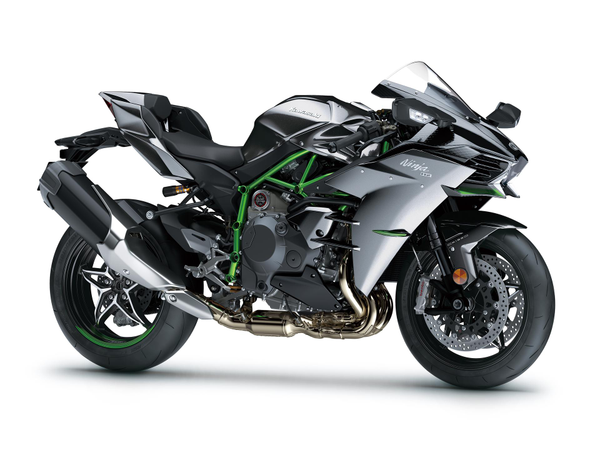
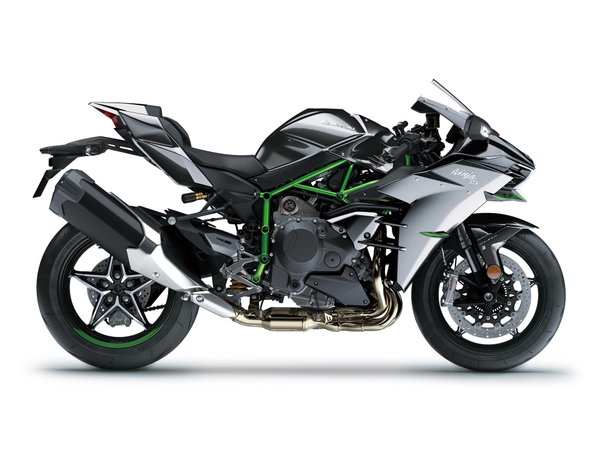
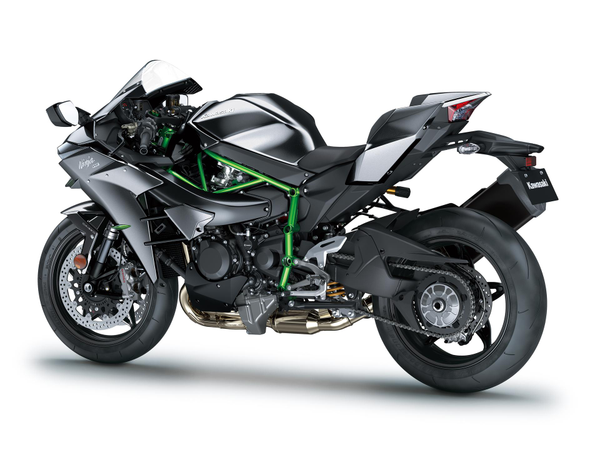
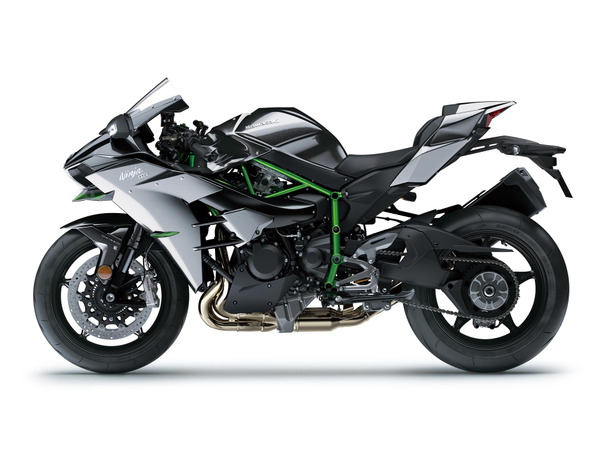
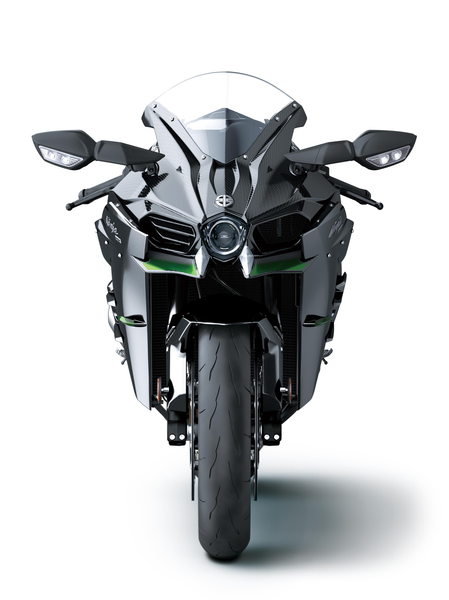
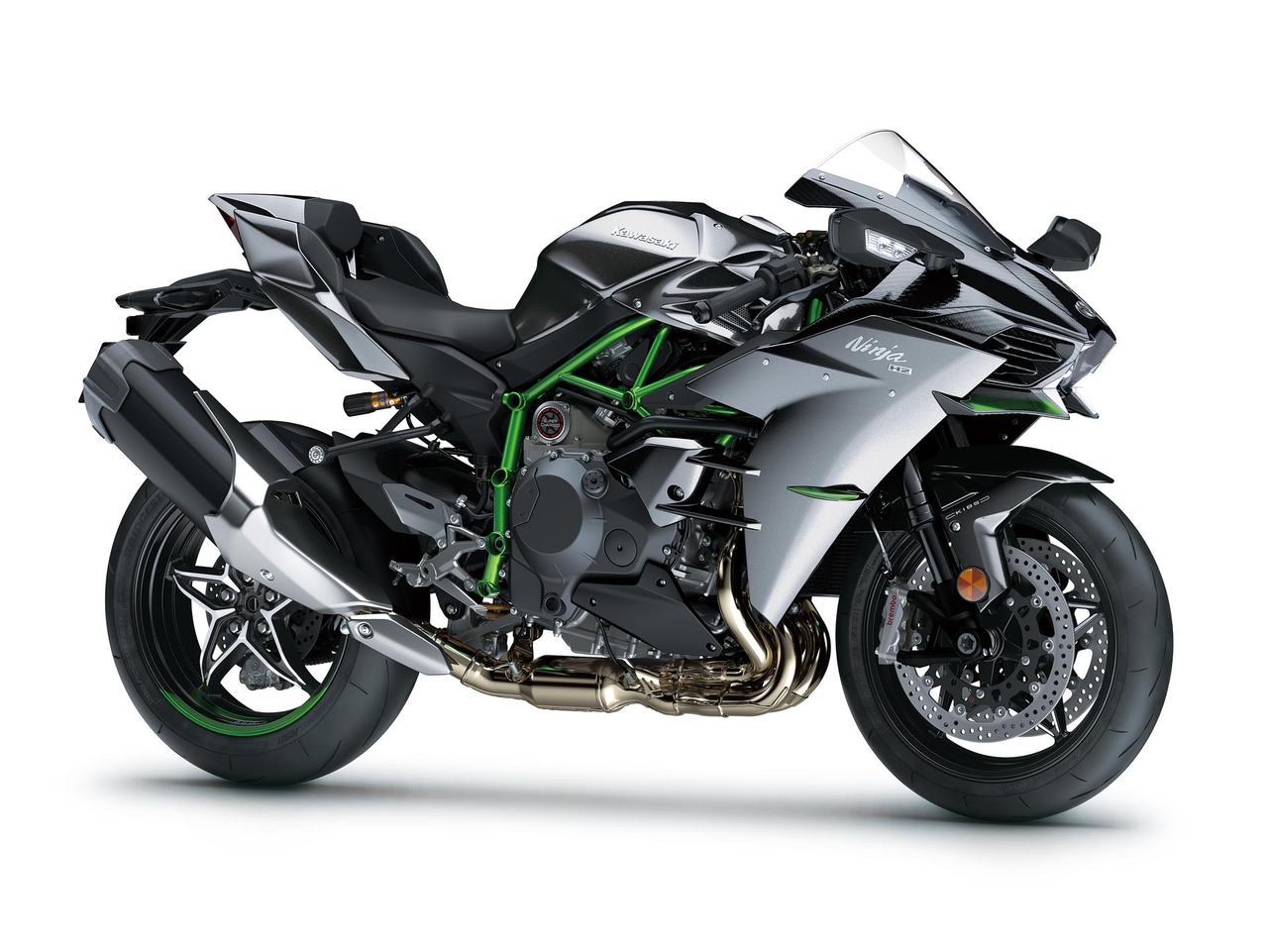
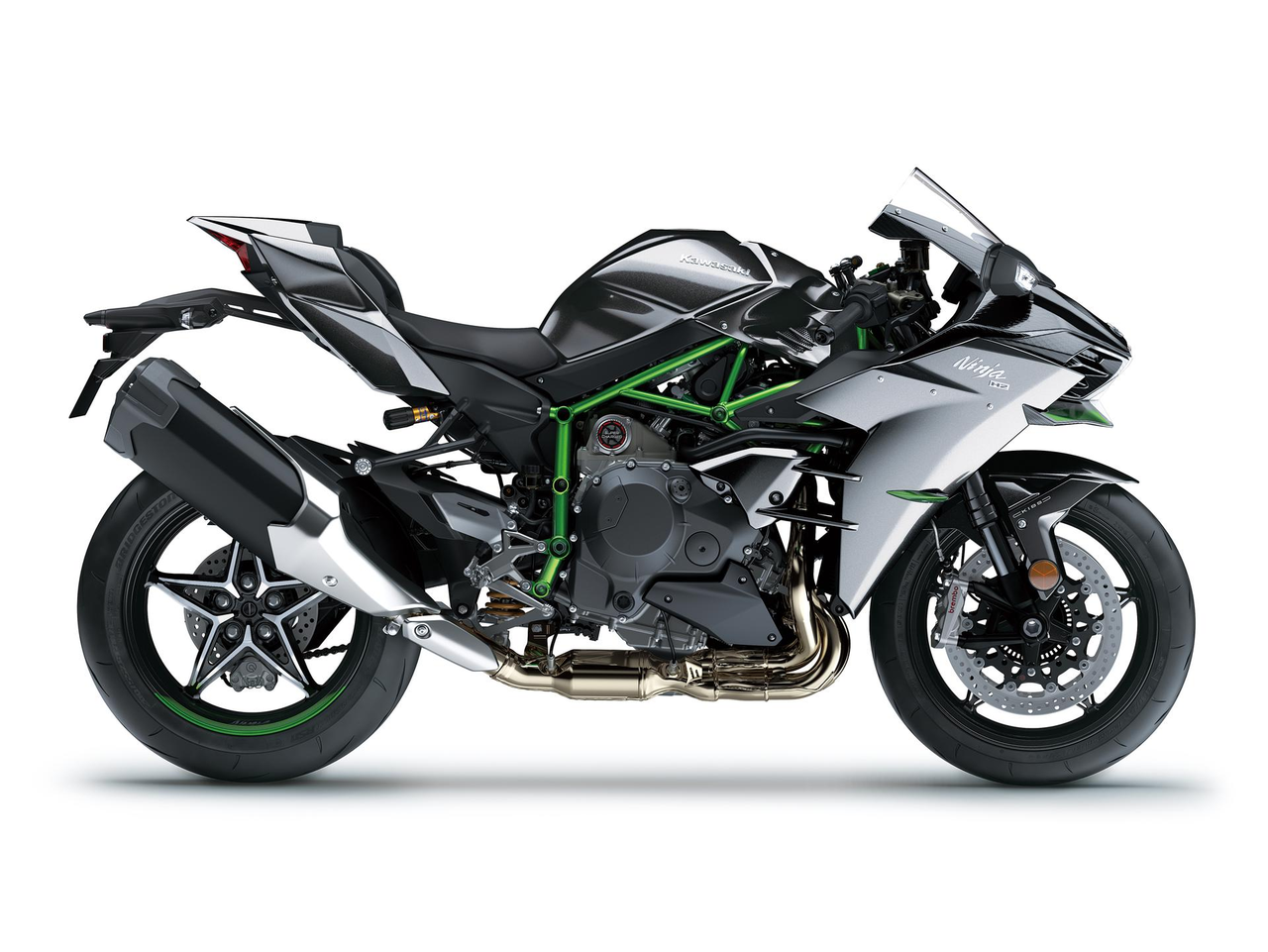
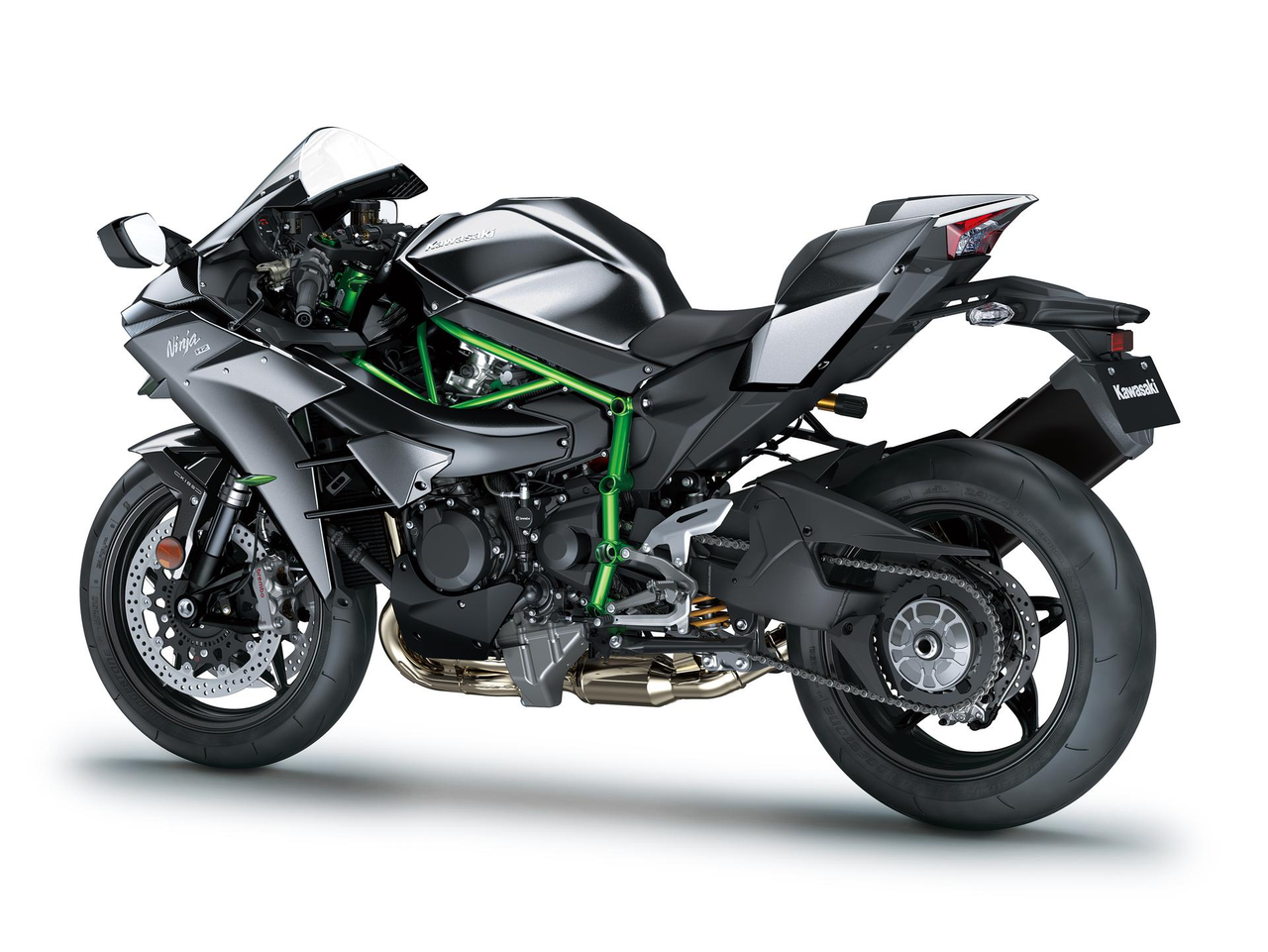
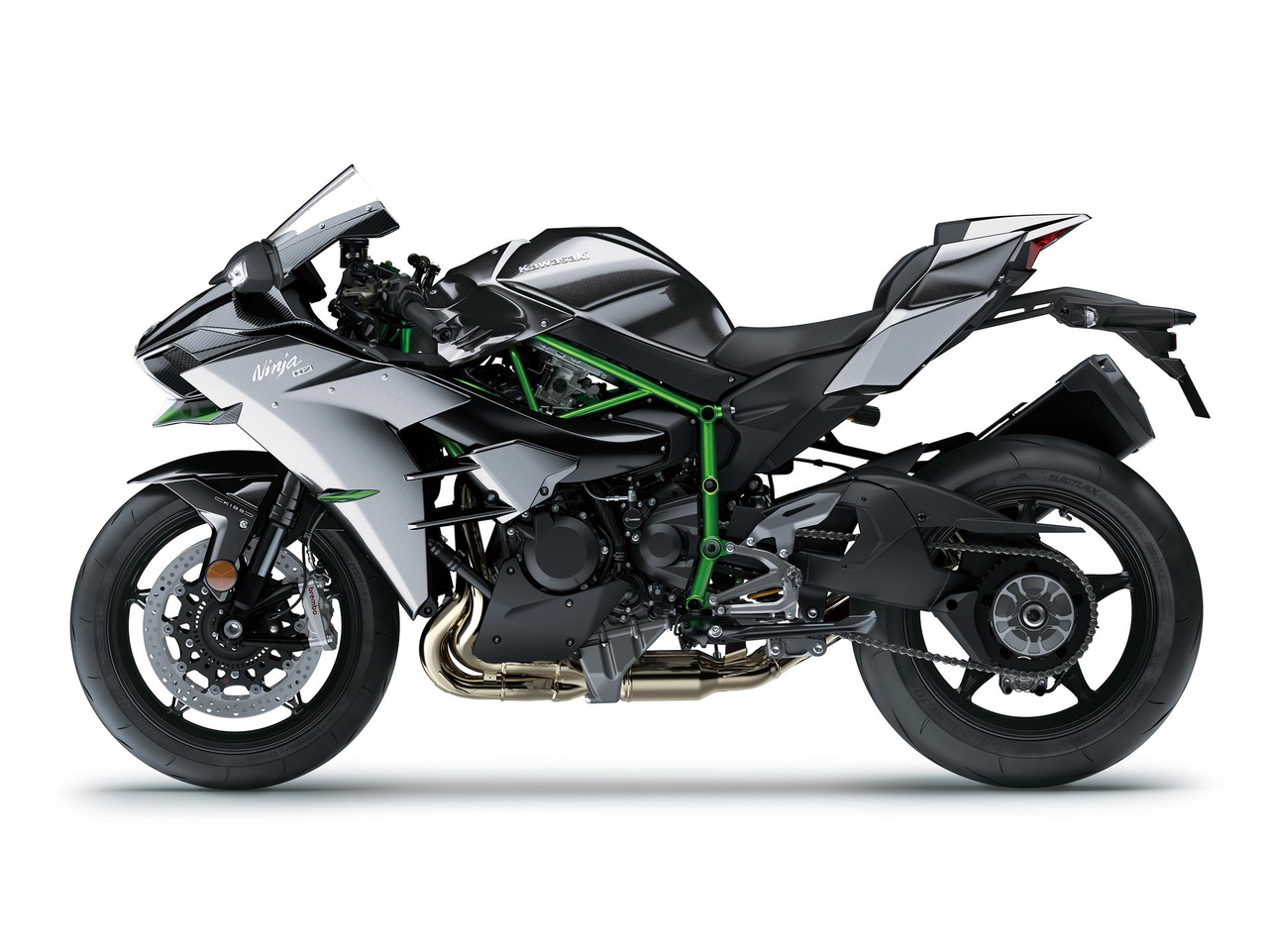
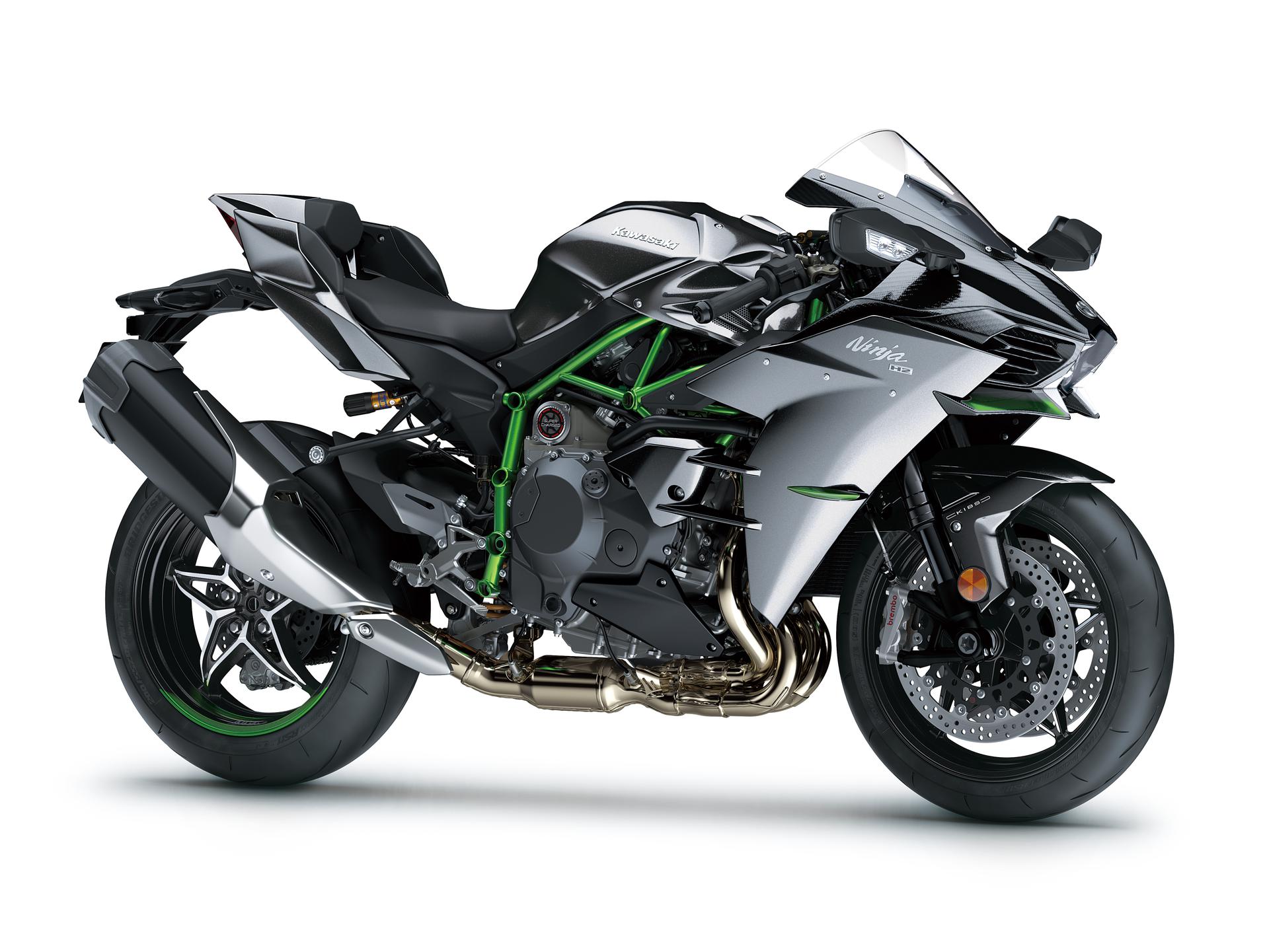
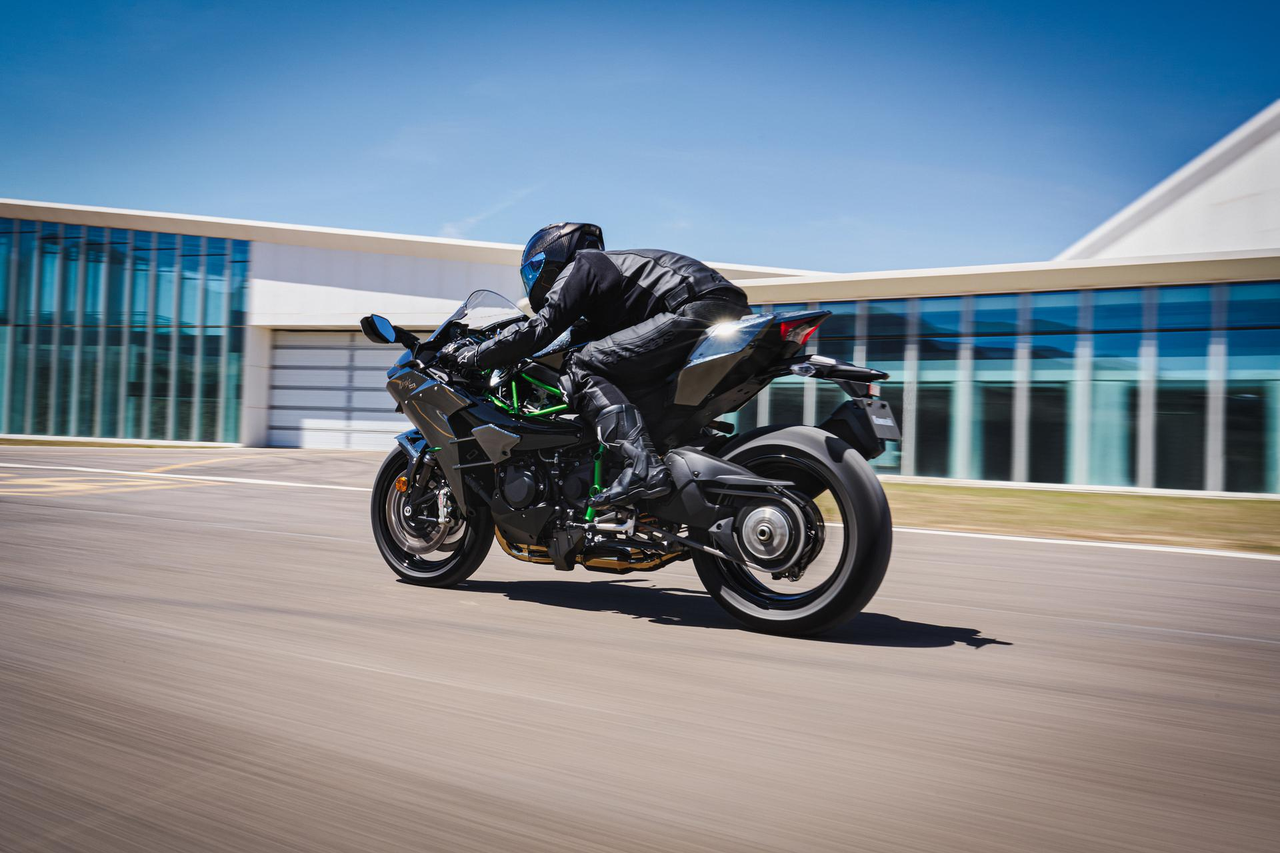
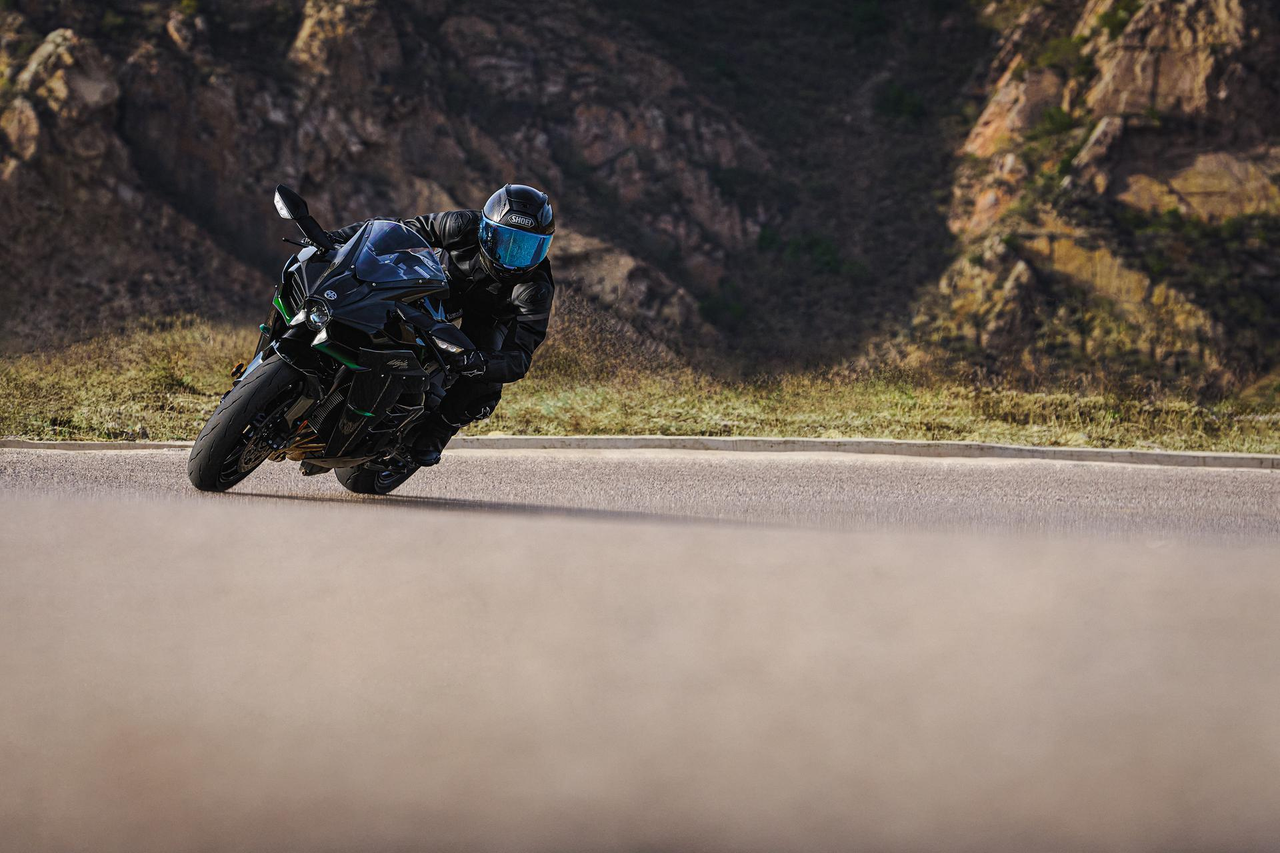
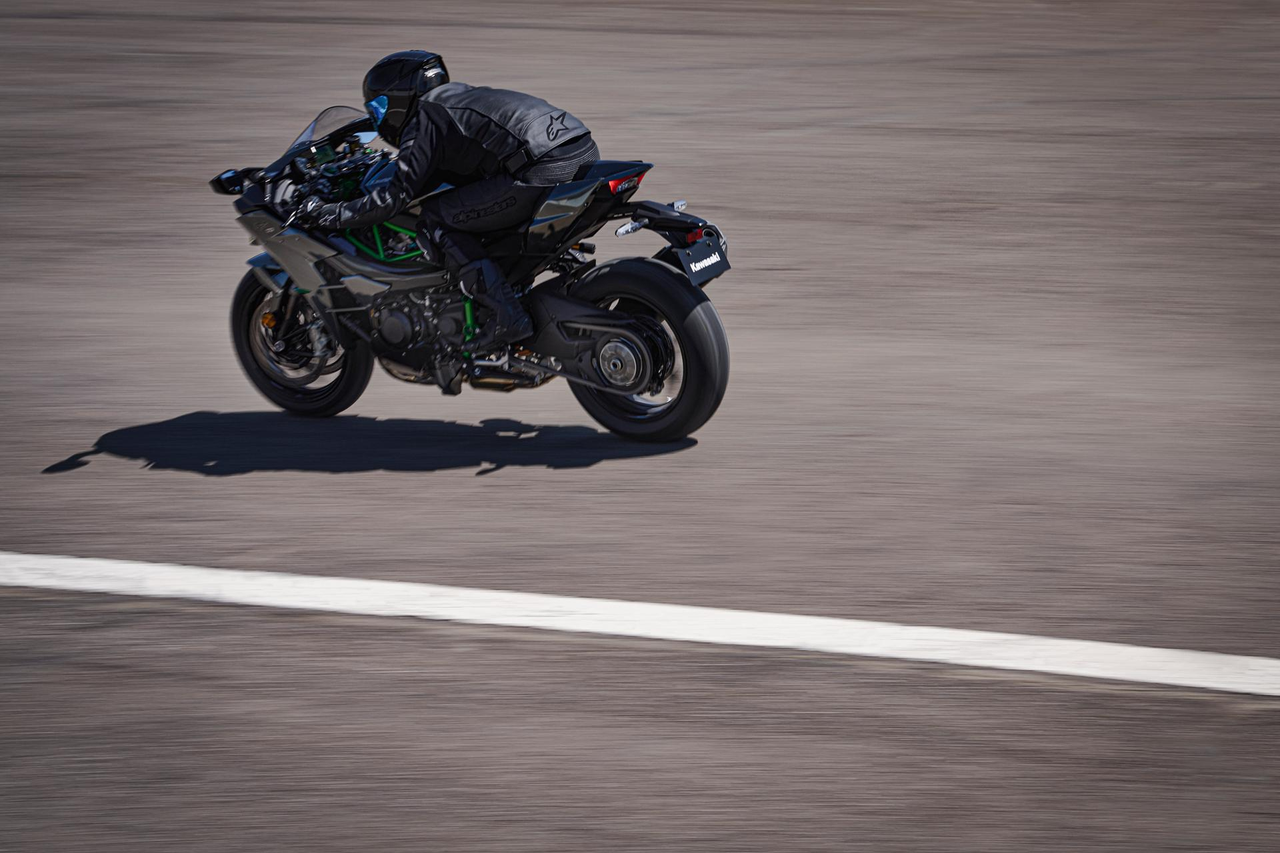
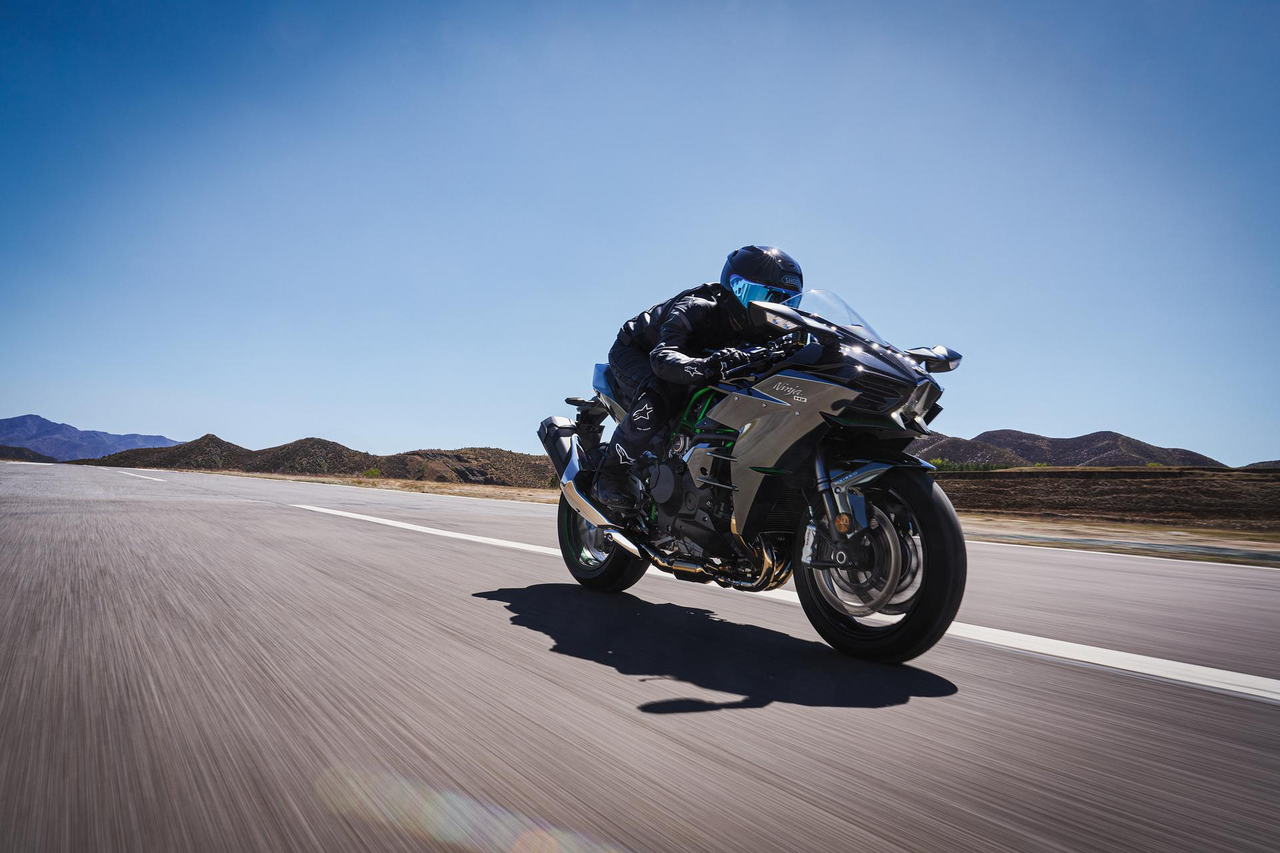
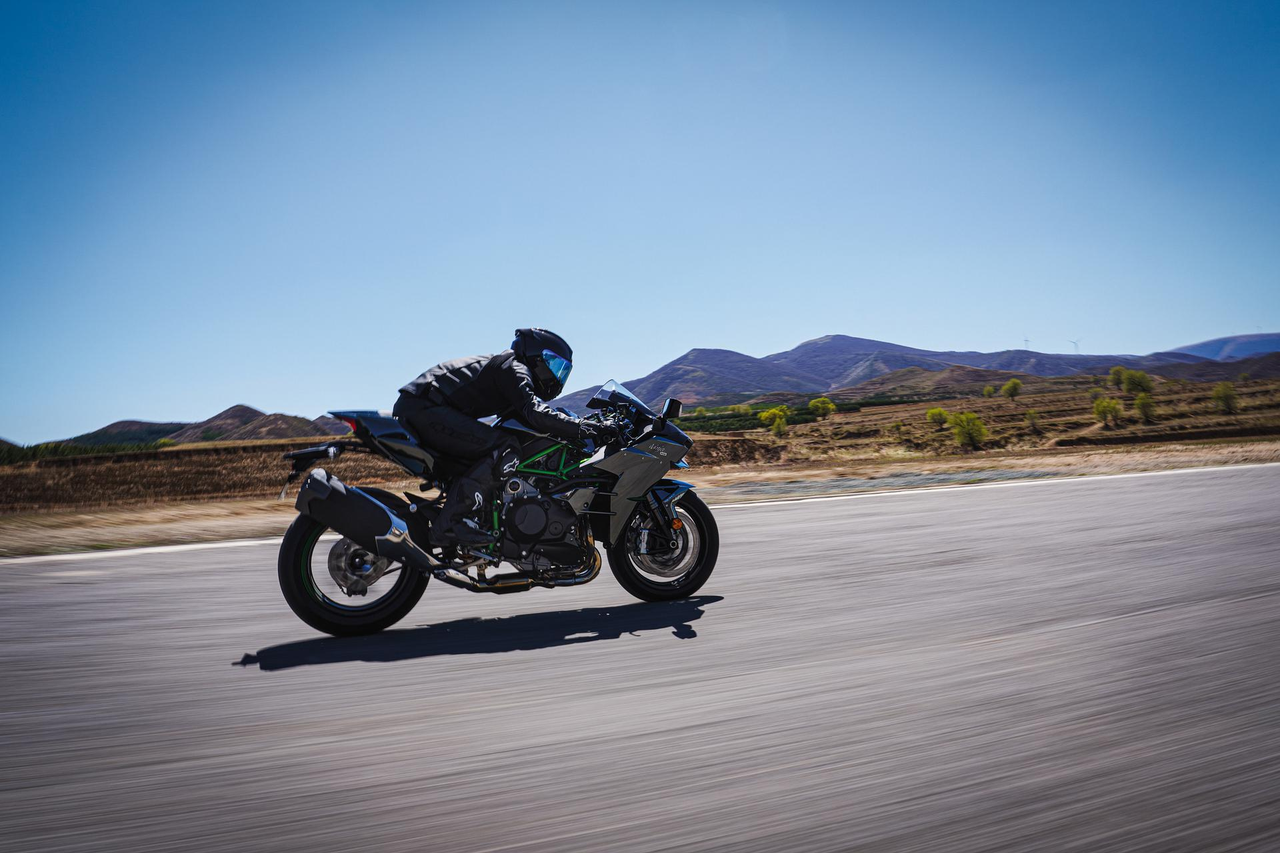
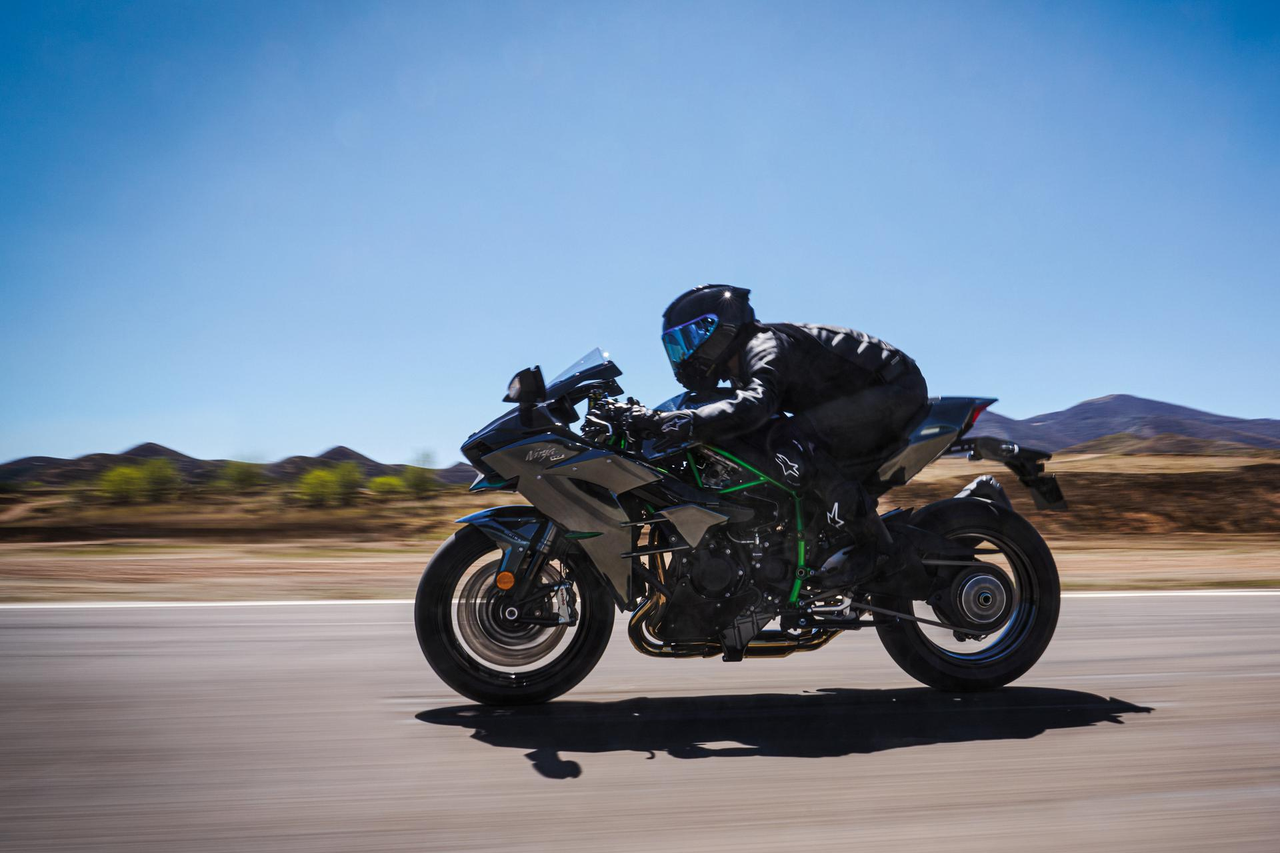
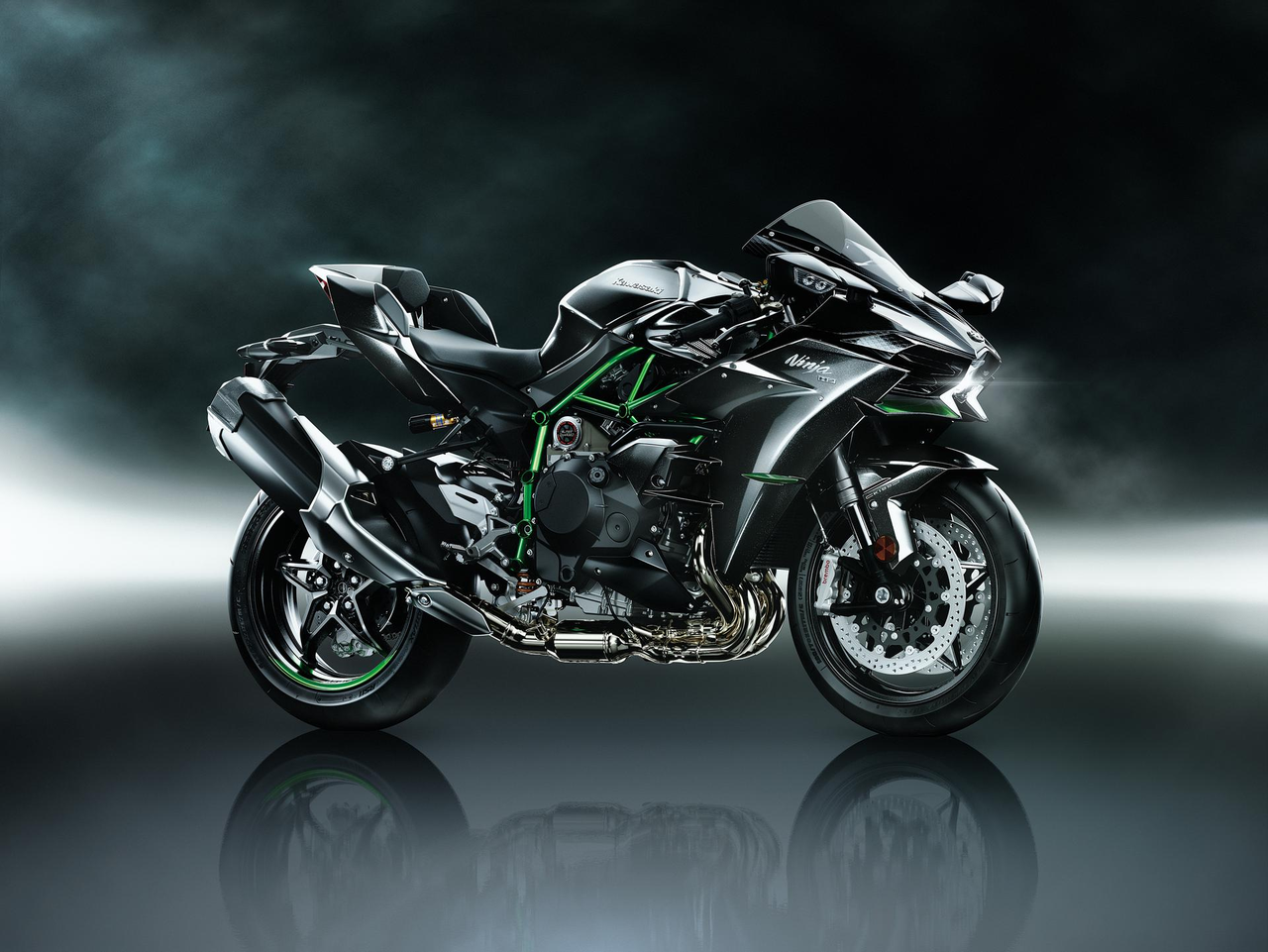
The new Ninja H2 Carbon proudly takes its place as a modern evolution of Kawasaki’s supercharged flagship.
A new 998cc In-Line Four supercharged engine boasts strong low- to mid-range torque paired with the Ninja H2 Carbon’s distinctive high-rpm acceleration sensation. Complementing the high level of control offered by a chassis and bodywork designed to harness the 300+ PS of the mighty Ninja H2 CarbonR, Brembo’s latest Hypure front brake calipers deliver flagship-worthy stopping performance.
Additionally, new aviation-inspired instrumentation contributes a visual element to the Ninja H2 Carbon’s exhilarating exhilarating acceleration, while an advanced suite of rider support technology offers intuitive control—empowering you to confidently explore its phenomenal performance in a wide range of riding situations.
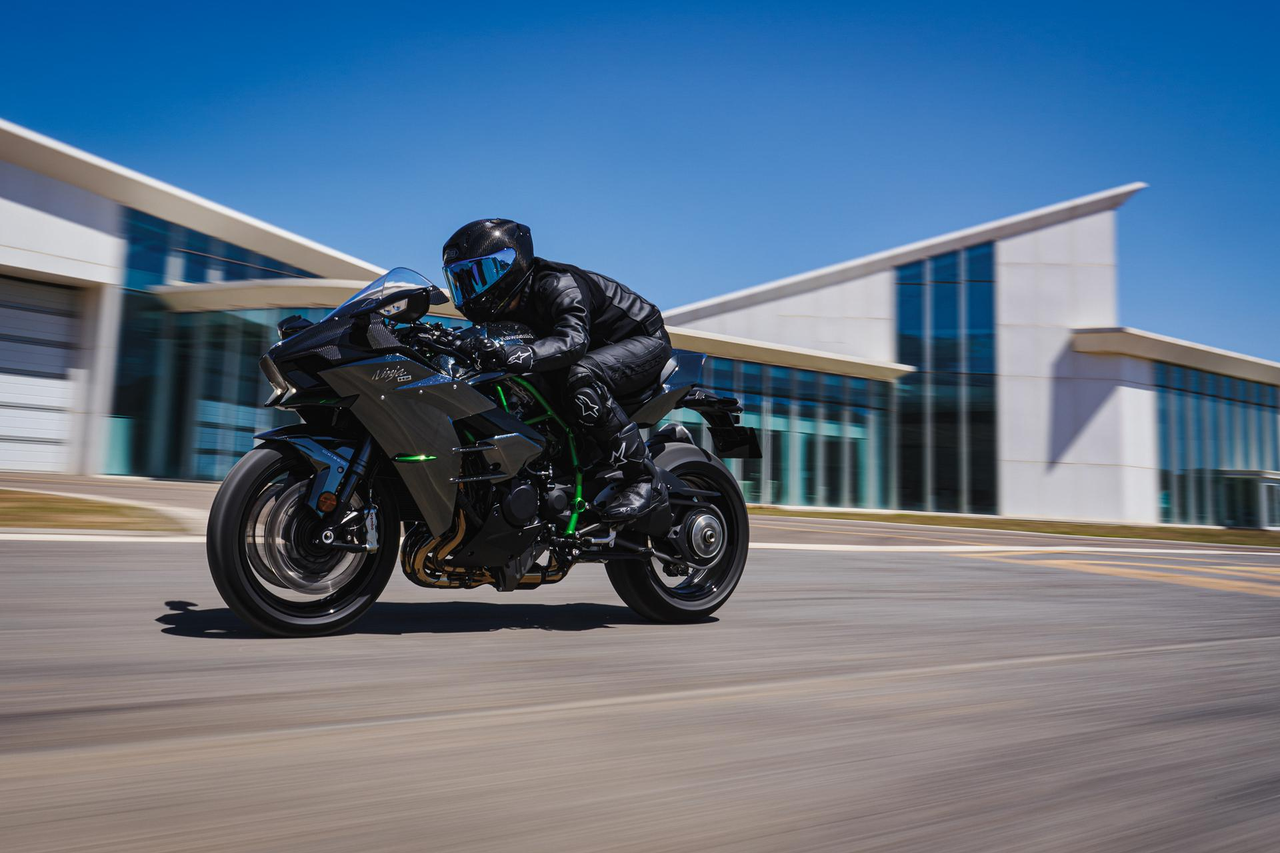
With every twist of the throttle, the Ninja H2 Carbon offers a riding experience unlike anything else on the road.
Colour
Show all
Show less
€40,000.00
Inpage Navigation Section: Gallery
Inpage Navigation Section: Features & Specs
To offer intense acceleration, an engine able to produce big power was essential. While a large-displacement engine could easily provide a high engine output, to ensure a lightweight, compact overall package, a compact engine was also desired. Using a supercharged engine enabled Kawasaki to achieve both of these engine design requirements. The Ninja H2’s 998 cm3 In-Line Four supercharged engine offered a maximum output of 200 PS with an engine size on par with other supersport litre-class power units. Designed in-house, the immense potential of the highly compact, highly efficient engine was a testament to the technology possessed by the KHI Group. For 2027, a new engine with model-specific tuning and final gearing refine the Ninja H2’s supercharged performance for real-world acceleration. Combined with a lighter new exhaust system, the result further highlights the distinctive acceleration sensation of Kawasaki’s supercharged flagship.
Designed for the performance parameters of the closed-course Ninja H2R and shared with the street-going Ninja H2, the chassis needed to ensure unflappable composure at ultra-high speeds, offer cornering performance to be able to enjoy riding on a circuit, and finally to have a highly accommodating character. High-speed stability could easily be achieved with a long wheelbase, but a shorter wheelbase was selected to achieve the compact overall package and sharp handling that were also desired. The frame needed not only to be stiff, but also to be able to absorb external disturbances, which, when encountered while riding at high speeds, could unsettle the chassis. The Ninja H2’s trellis frame provides both the strength to harness the incredible power of the supercharged engine, and the balanced flex to achieve the stability and pliability for high-speed riding. Chassis geometry very similar to a litre-class supersport model contributes to a compact package with handling that covers fun riding on the street and highway to the circuit. High-grade racing suspension further contributes to the handling performance, and high-spec Brembo brakes (now including Hypure front calipers on the 2027 model) deliver precise brake control to manage speed adjustments. These are complemented by single-seat ergonomics designed specifically to help riders enjoy the Ninja H2’s intense acceleration and sustained high-speed capabilities.
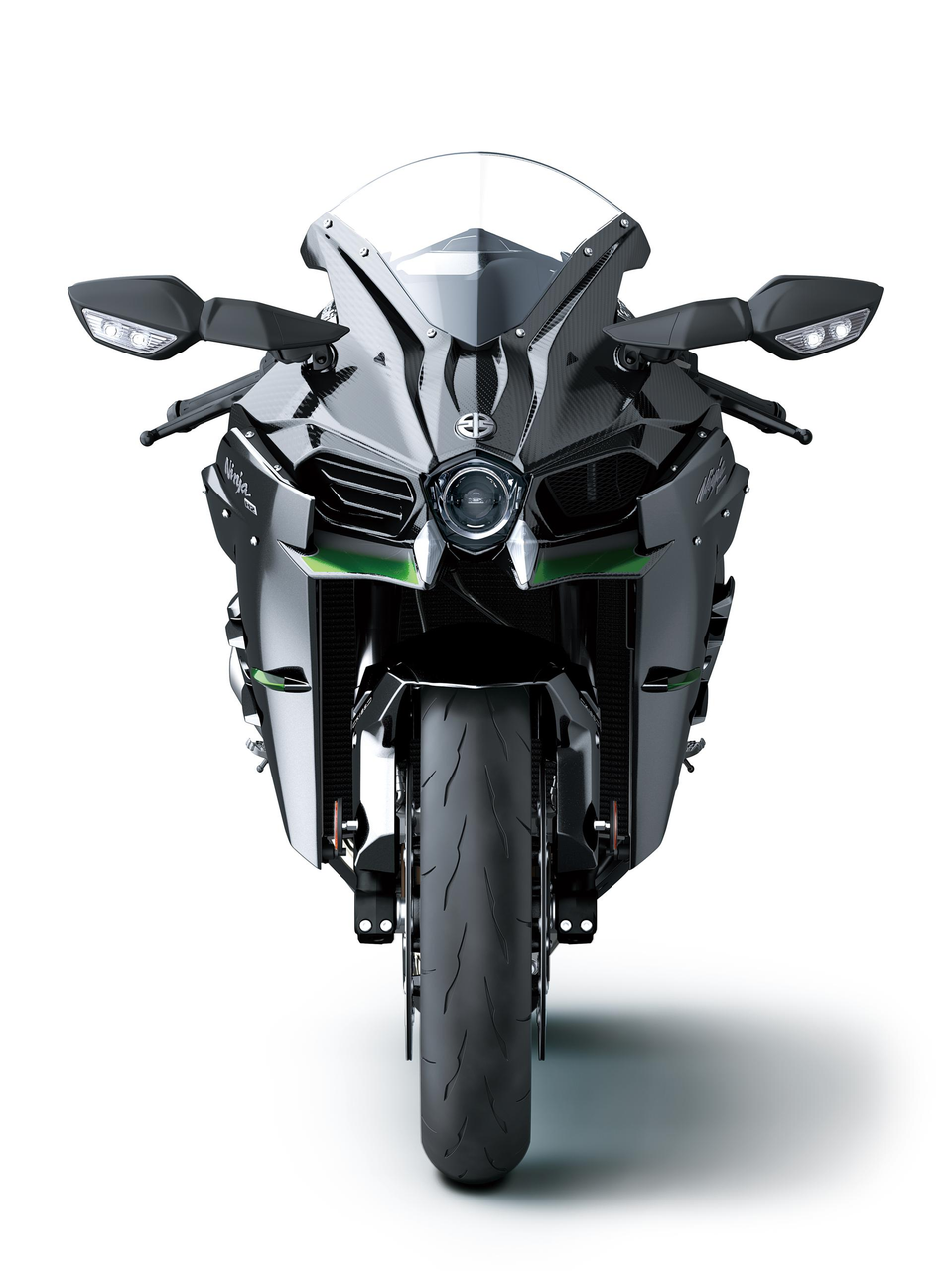
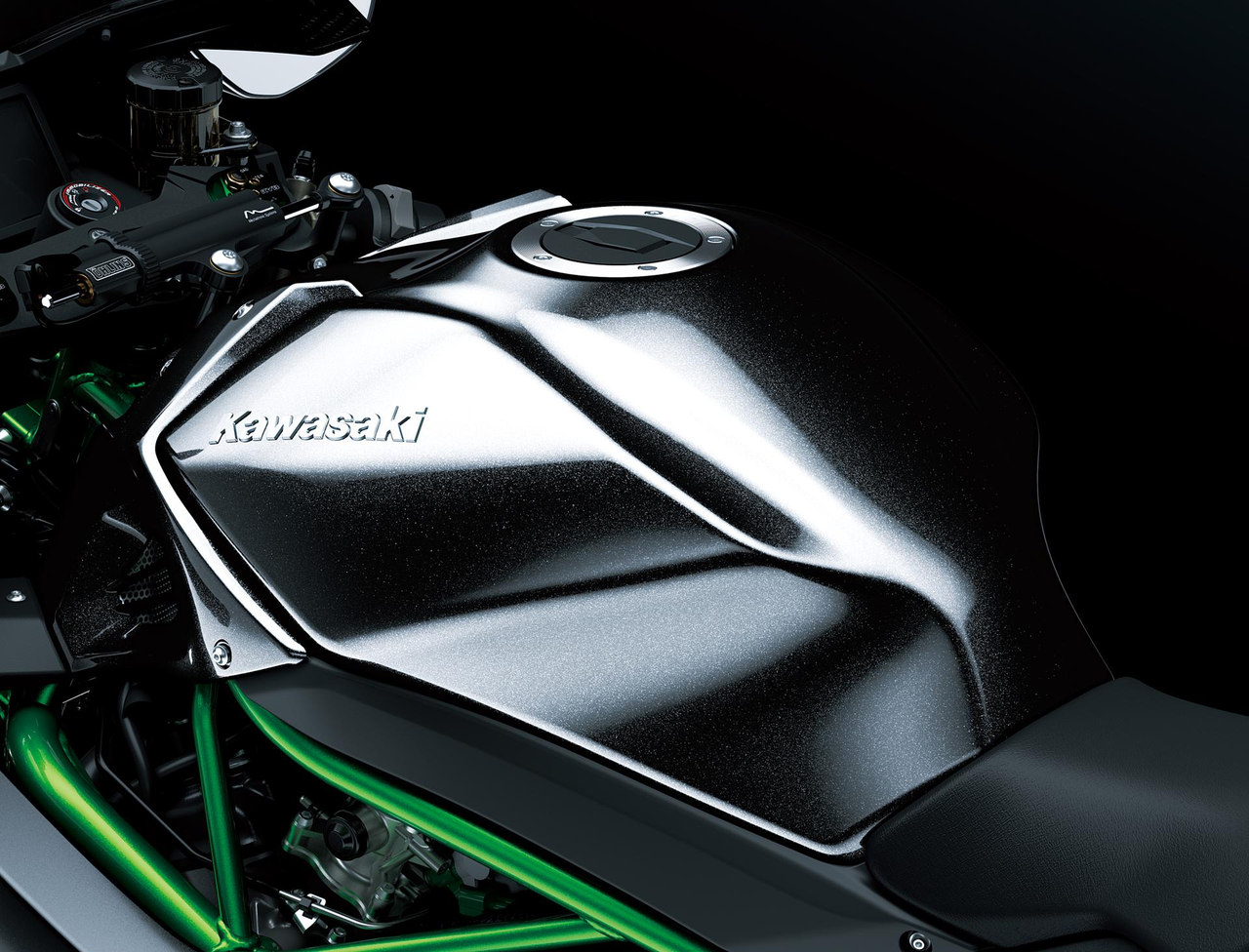
Even now, more than 10 years since its debut, the Ninja H2’s distinctive form remains timeless, a bold design exuding presence that reflects its incredible performance. More than cosmetic, the Ninja H2’s functional beauty is a product of joint development efforts with the KHI Group’s Aerospace Systems Company. Its aerodynamically sculpted bodywork minimises drag and enhances stability and control at high speed. Kawasaki’s original silver-mirror paint further underscores the Ninja H2’s position outside conventional boundaries. The special paint, even more brilliant on the 2027 model, is complemented by a layer of highly durable paint with self-repairing properties that help preserve its one-of-a-kind looks. From the cockpit, new instrumentation adds to the exhilaration of piloting a model designed to deliver the ultimate acceleration experience. In addition to a lean and pitch angle display inspired by aircraft HUDs, a graphically enhanced boost gauge gives riders visual confirmation of Ninja H2’s intense acceleration performance.
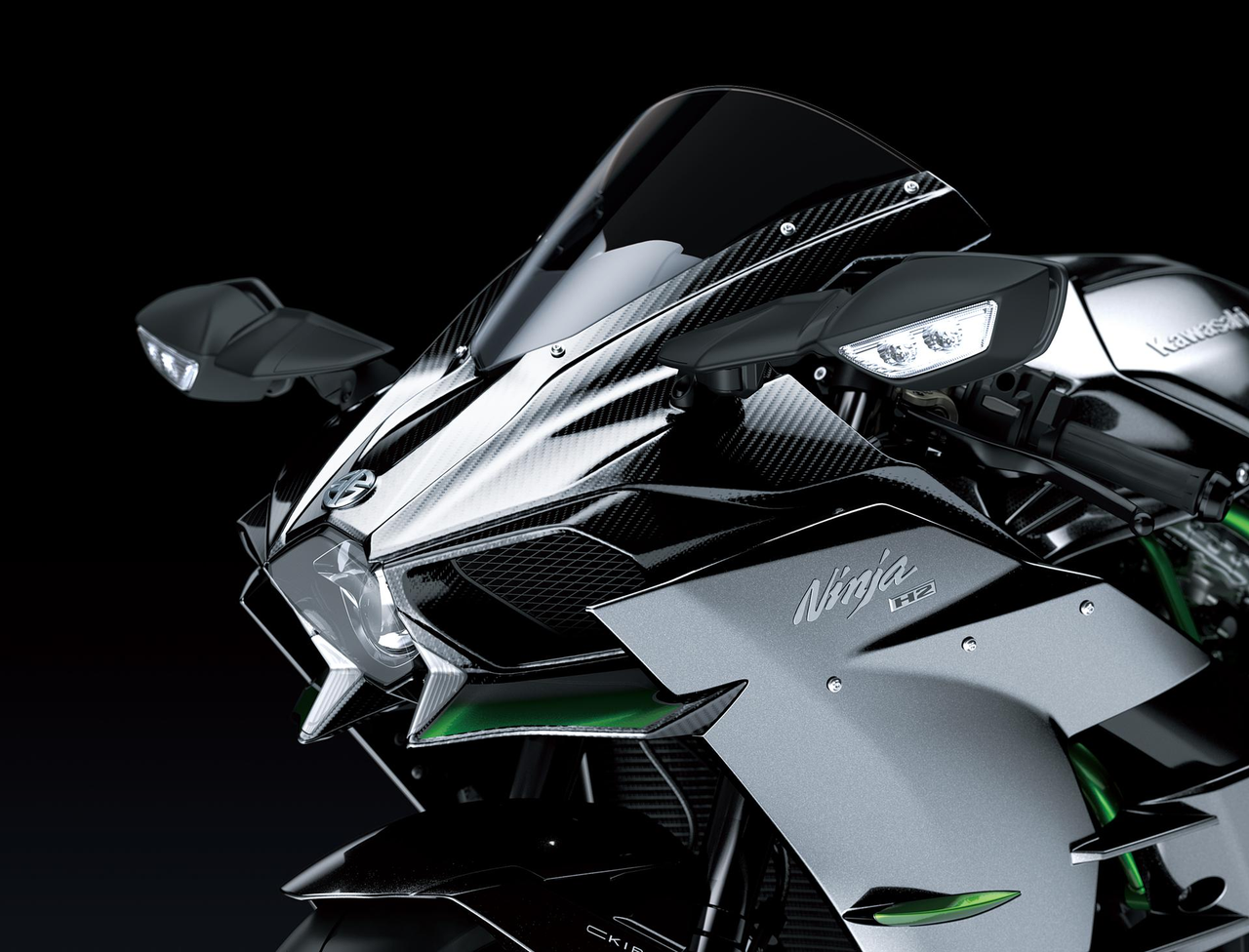
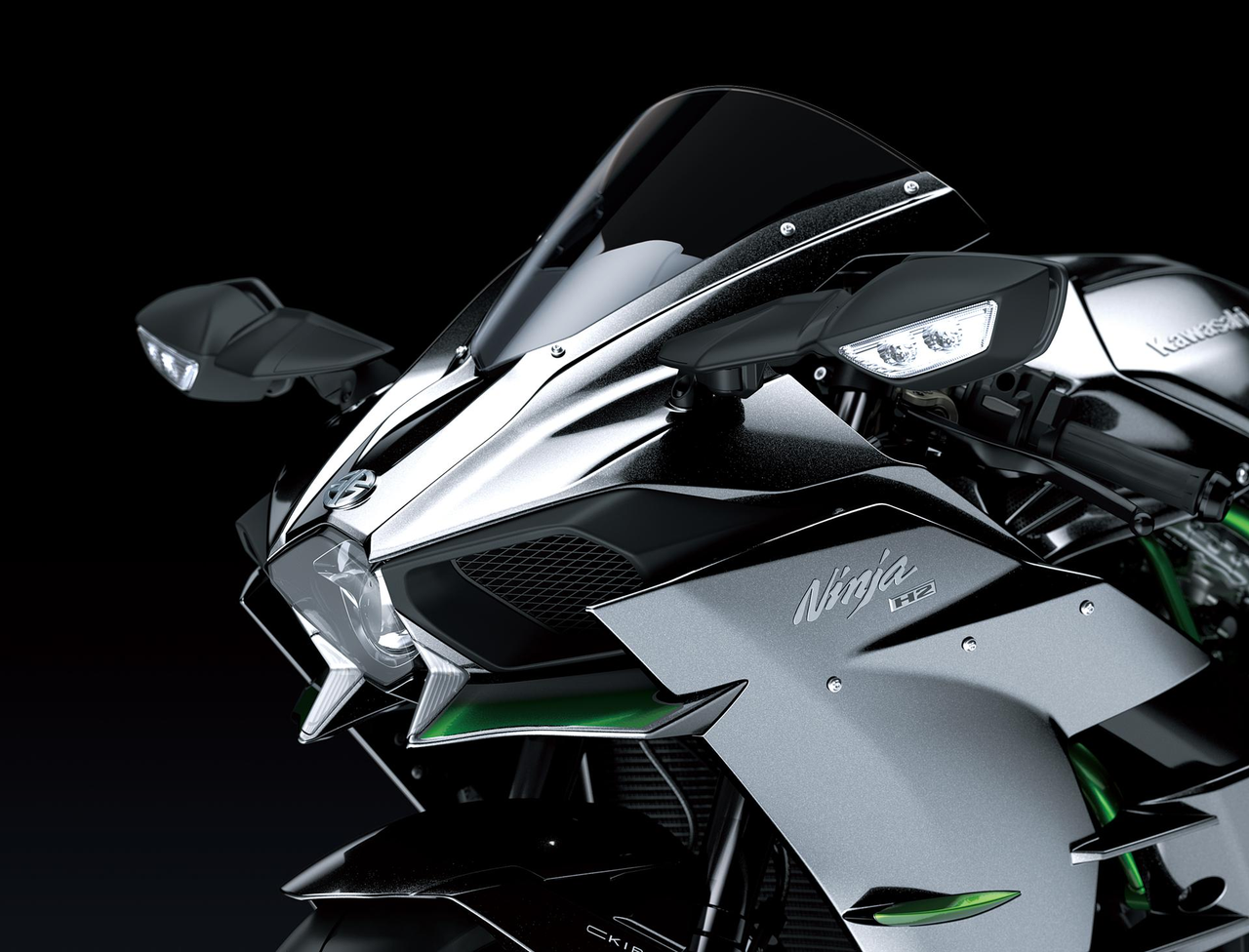
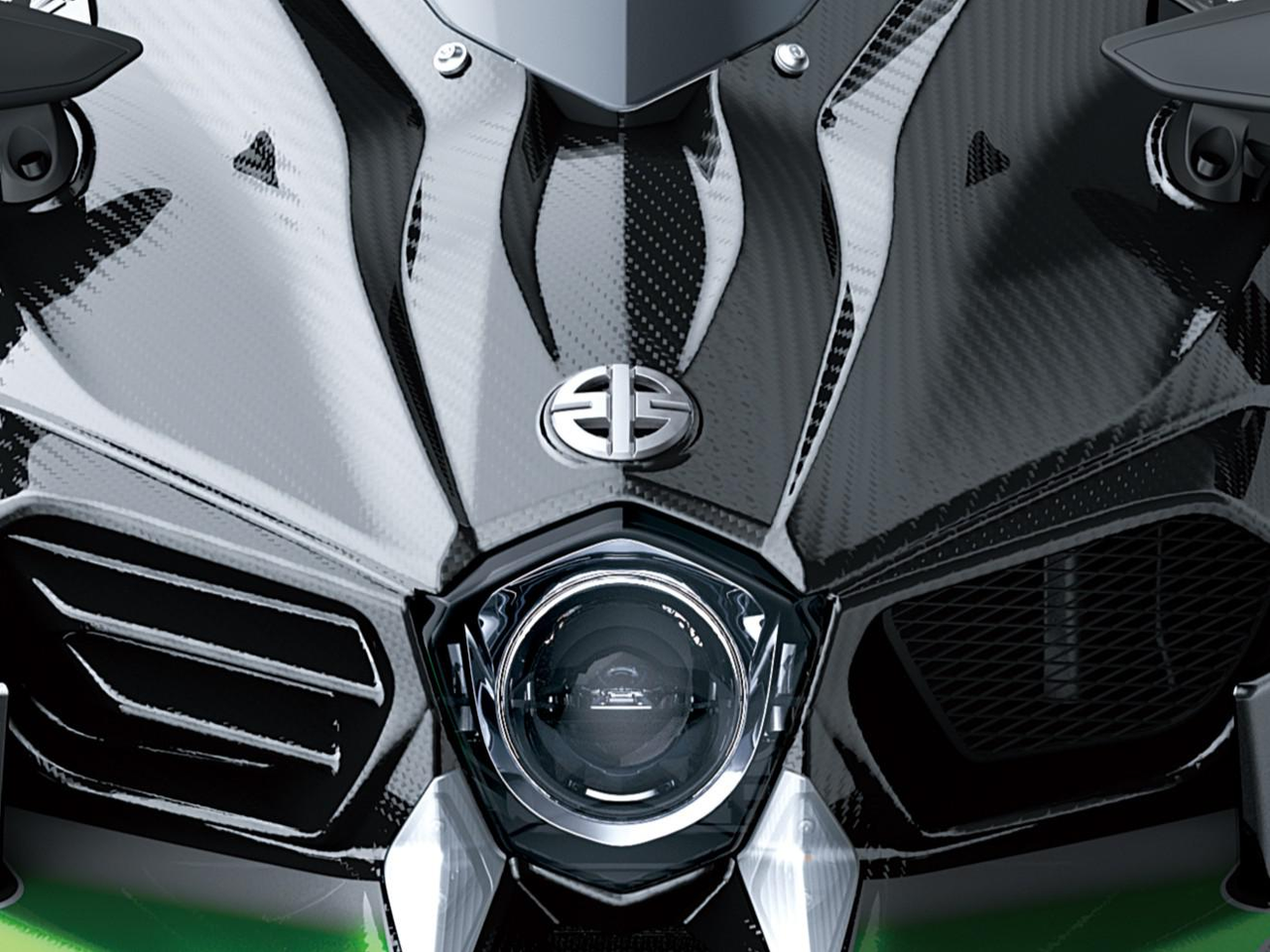
The limited-edition Ninja H2 CARBON features a carbon-fibre upper cowl similar to that of the Ninja H2R. The upper cowl, made from high-rigidity, lightweight CFRP (Carbon-Fibre Reinforced Plastic), instantly distinguishes the Ninja H2 CARBON from the standard Ninja H2, further heightening the sense of exhilaration that comes from claiming its otherworldly performance as your own.
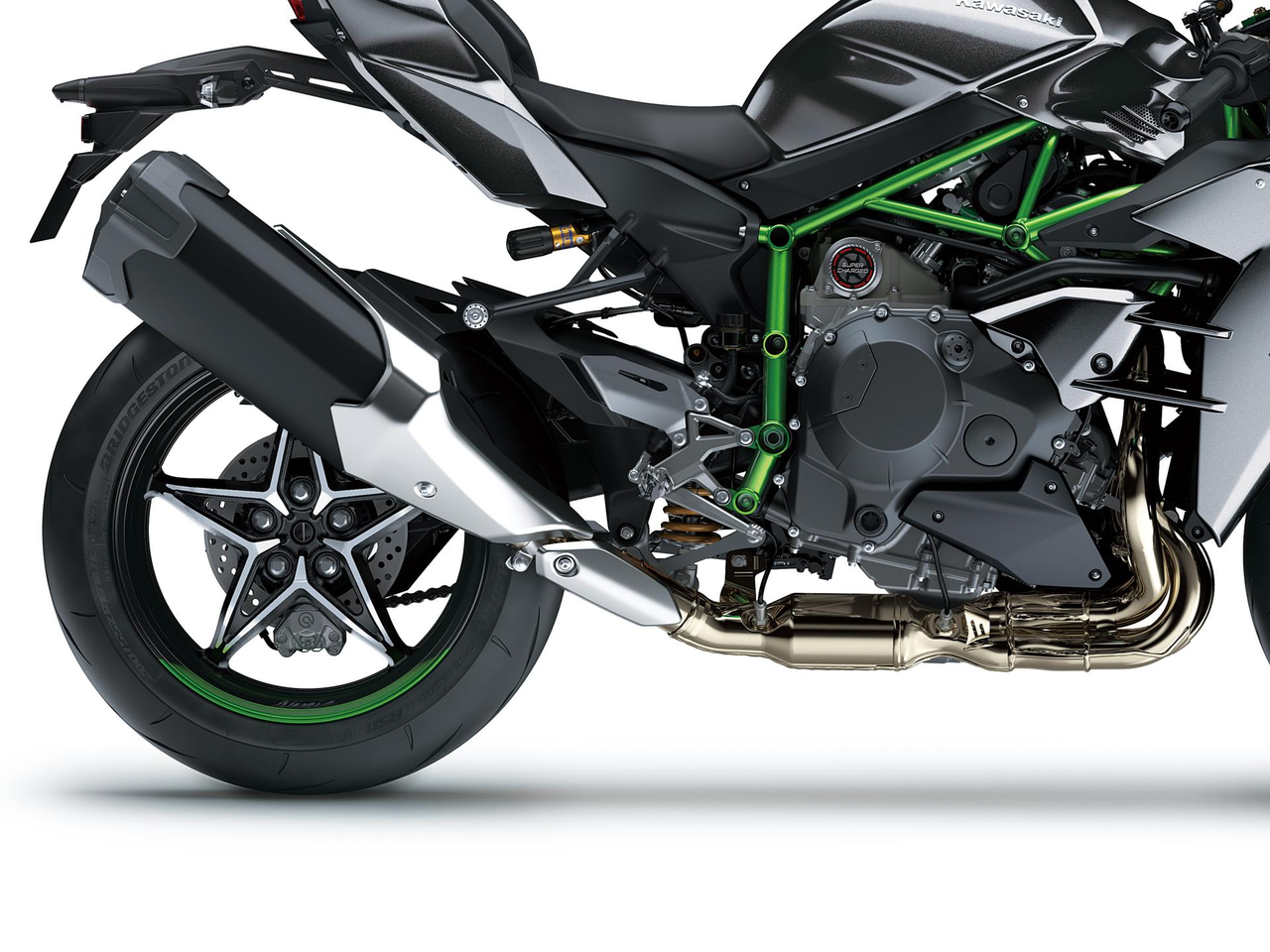
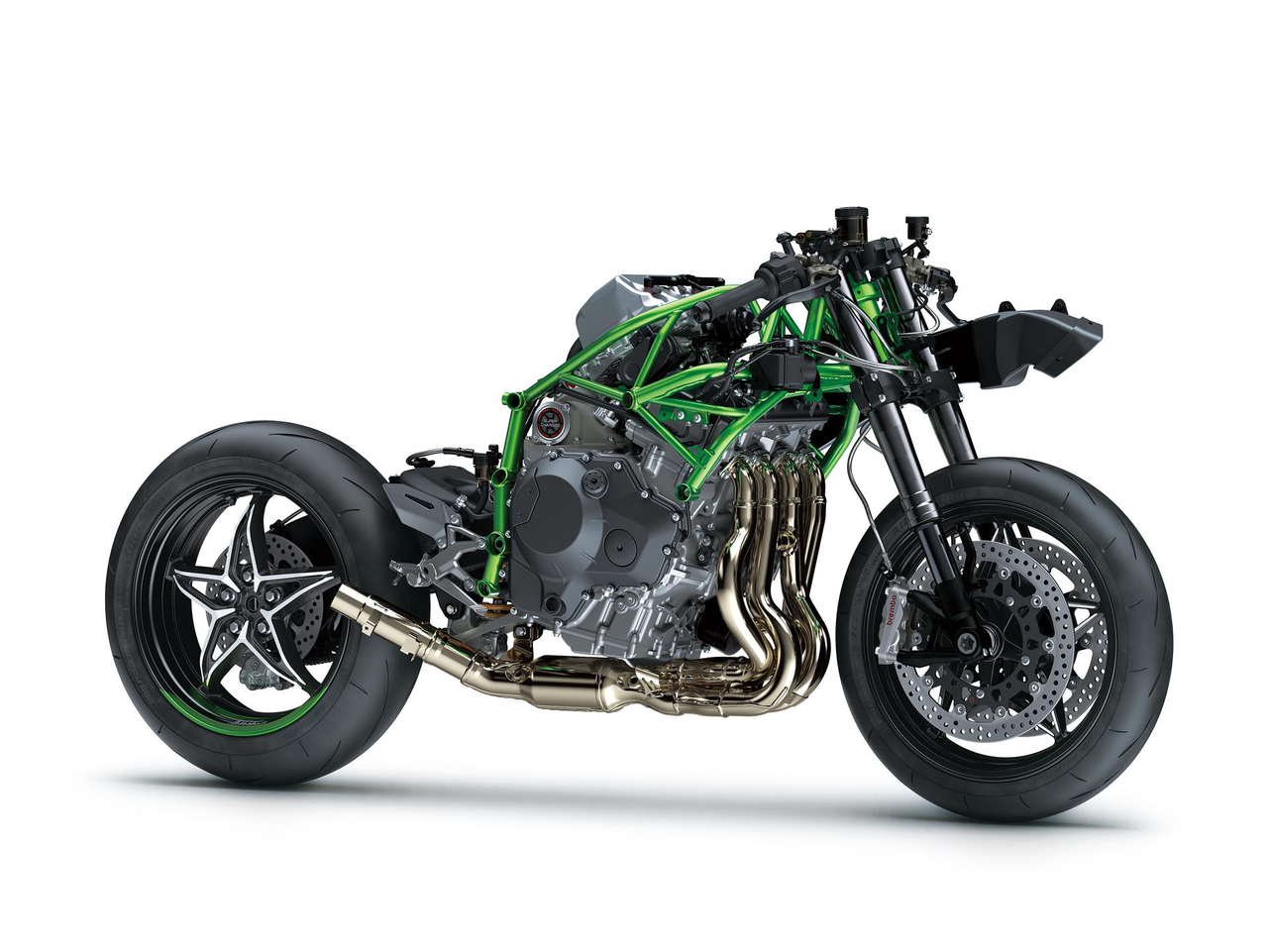
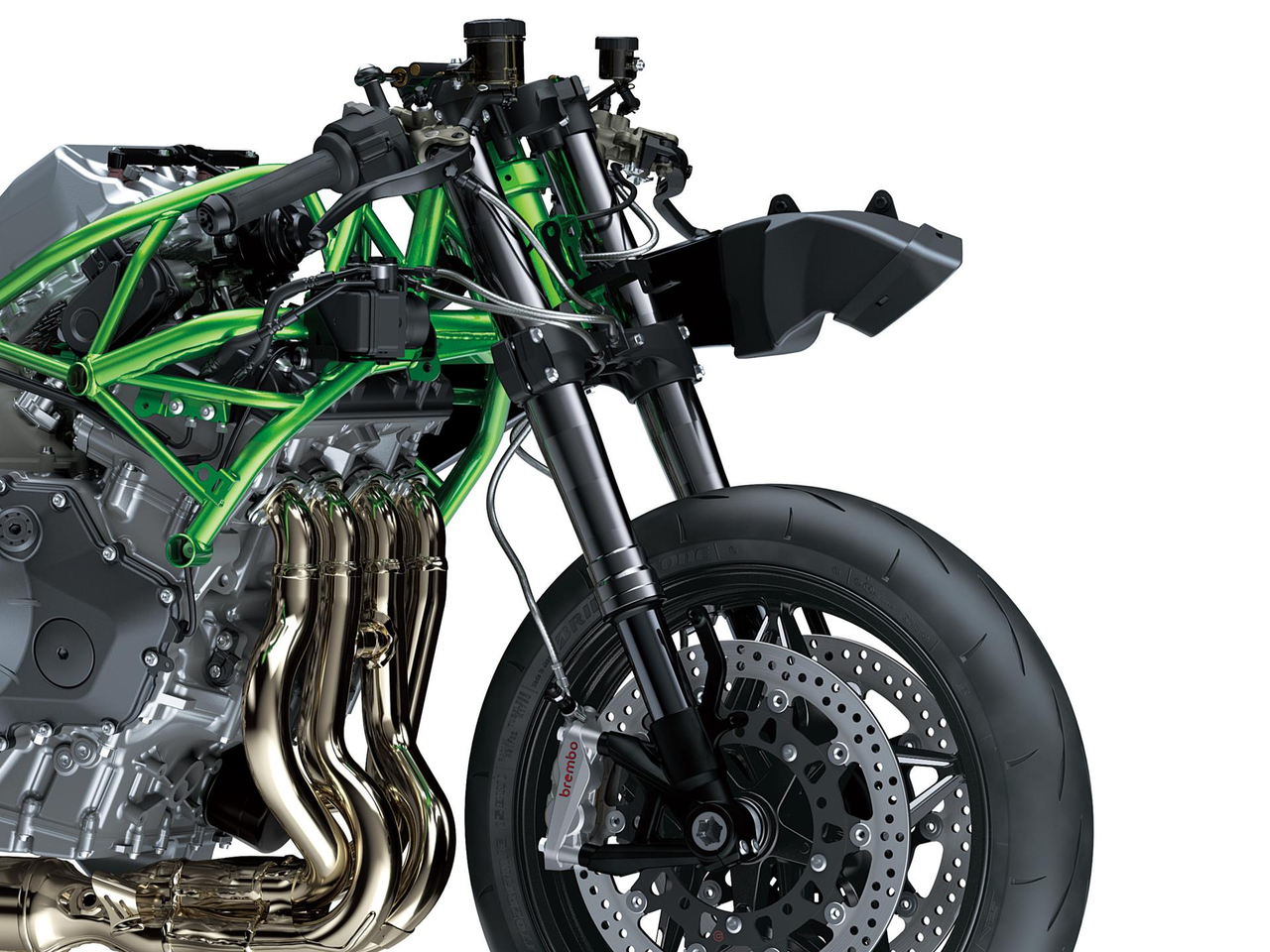
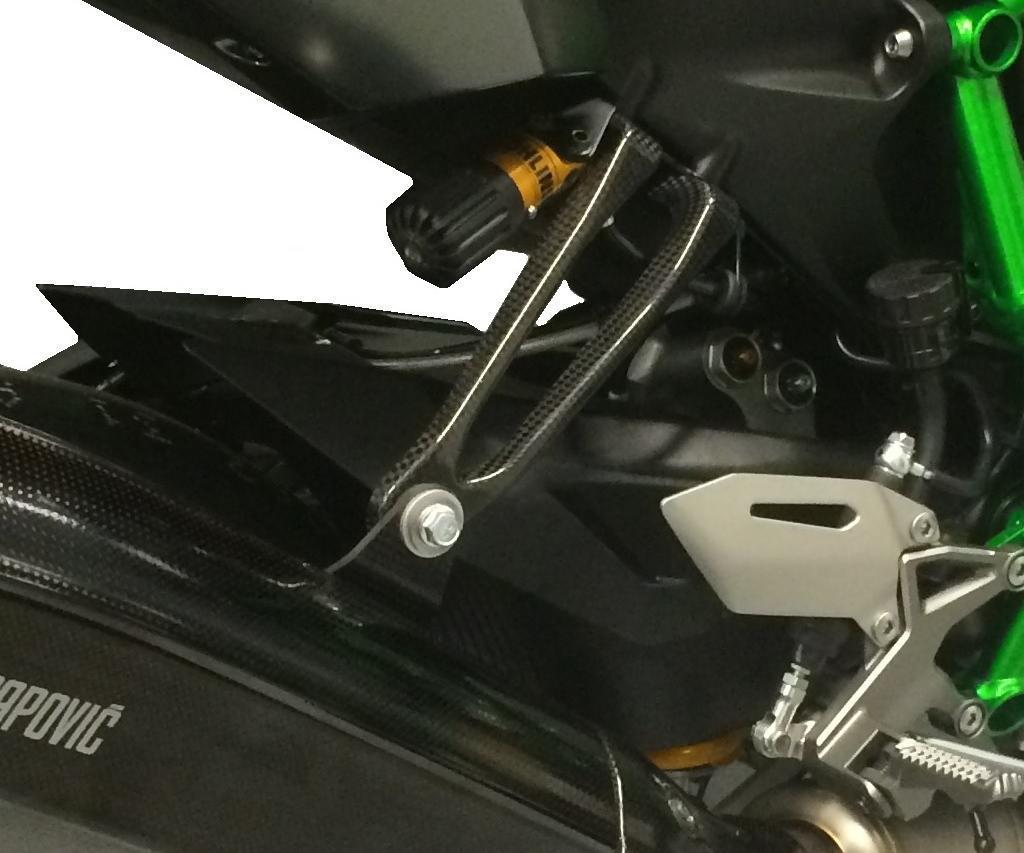
Matching the new engine’s power characteristics, optimised pipe diameters and a revised exhaust layout are complemented by a compact silencer, resulting in a lighter, more compact exhaust system that sharpens the direct connection between engine output and forward motion. Its compact layout also contributes to the Ninja H2’s condensed, purposeful styling. The black finish of the silencer body, contrasted by a buff-polished heat guard, contributes to the tight overall appearance and further emphasises the Ninja H2’s focused character.
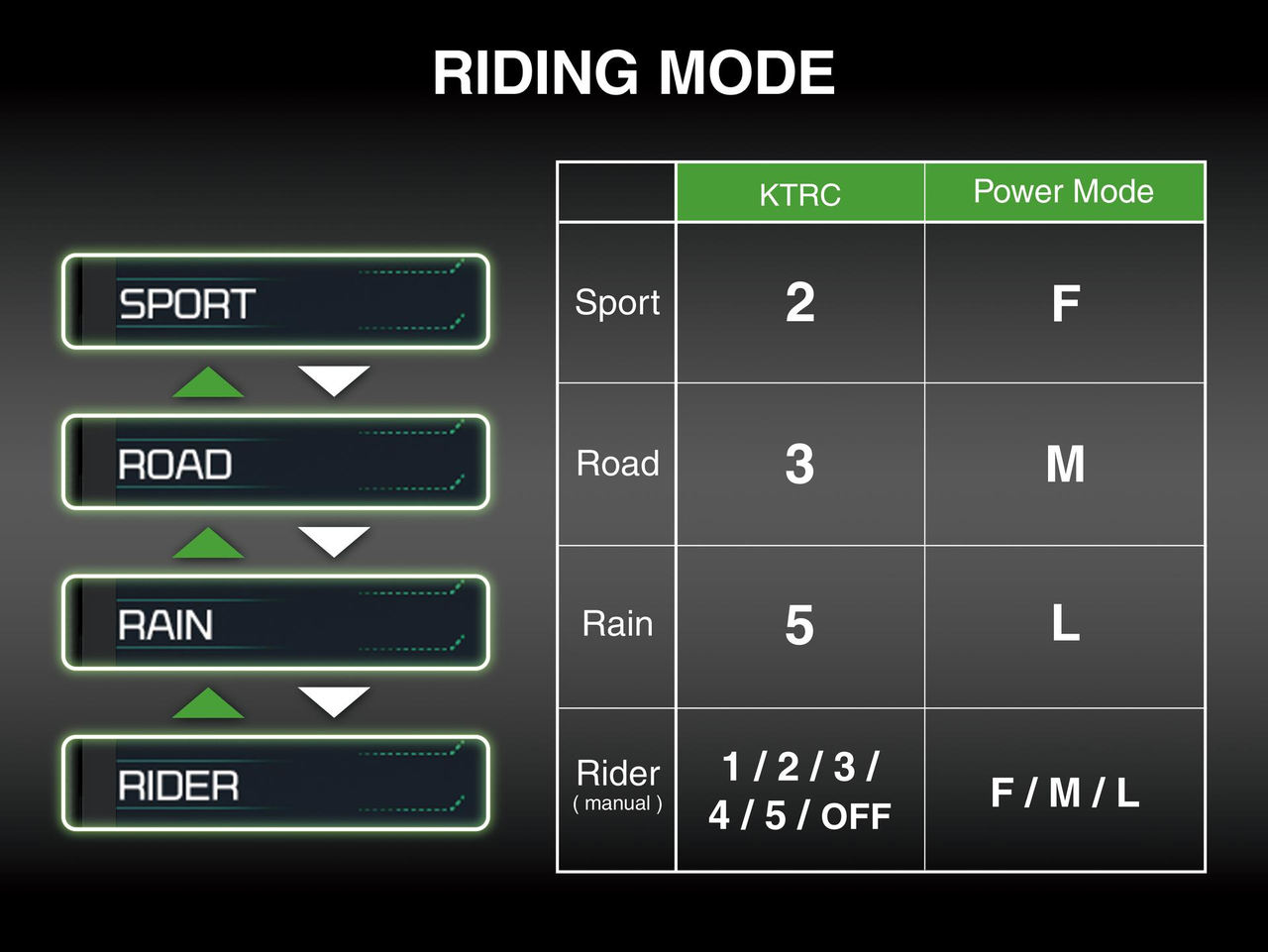
In addition to the full suite of advanced rider support technology that allows riders to explore the potential of the new Ninja H2 with confidence, a number of new features add to real-world enjoyment. Integrated Riding Modes, which link KTRC with Power Mode selection, let riders quickly and easily adapt to changing riding conditions. Electronic Cruise Control offers a respite between bouts of spirited riding. And smartphone connectivity via RIDEOLOGY THE APP MOTORCYCLE now includes Voice Command**, which enables riders to interface with their machine orally. Riding a machine capable of extraordinary acceleration requires a high level of focus. These features facilitate vehicle operation when not sport riding, helping riders conserve mental reserves in preparation for the next surge of acceleration. **Voice command feature requires a separate licence and availability varies by market
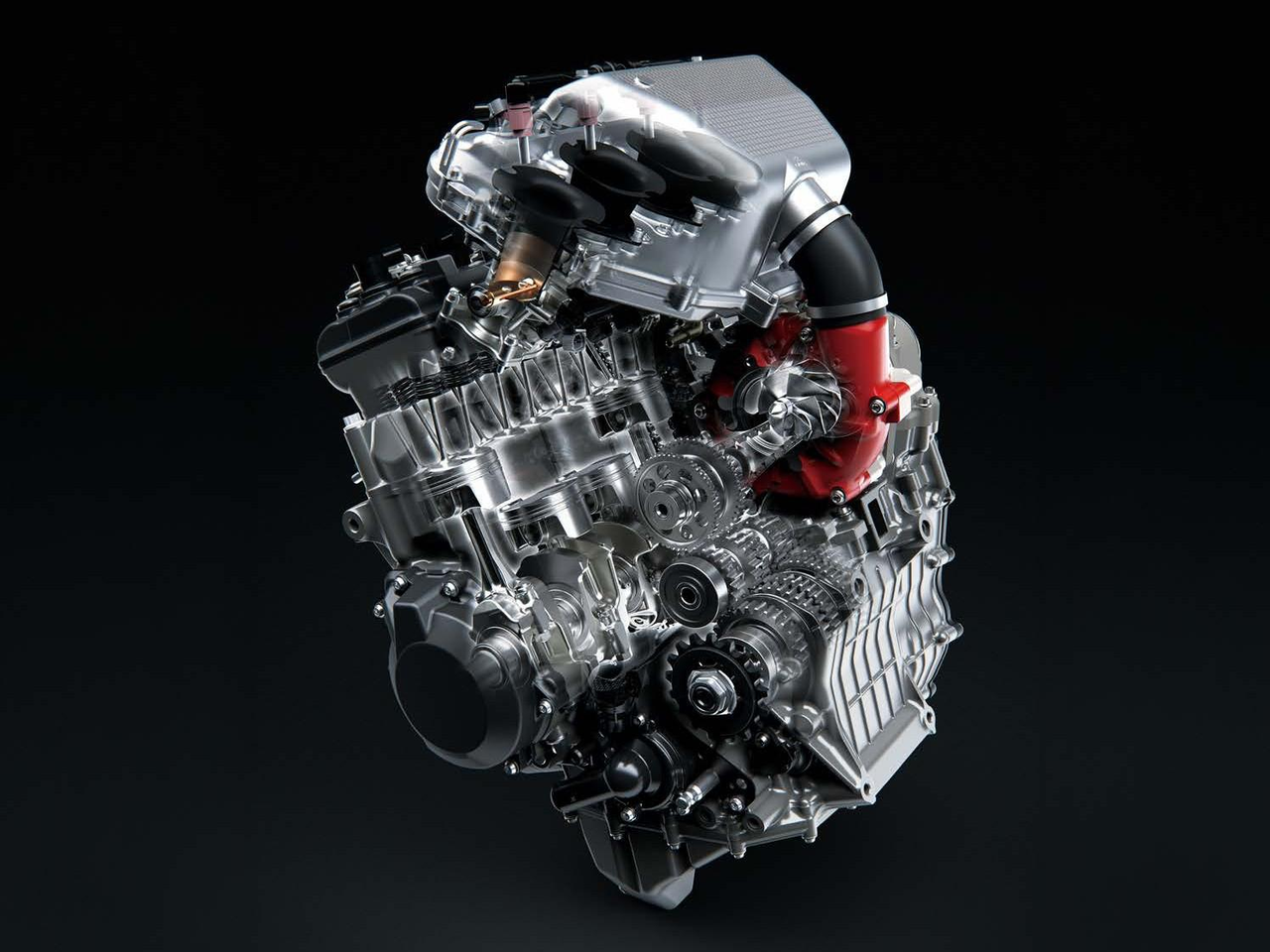
While the engine looks the same on the outside, it is essentially a completely different engine: the impeller and intake system represent a complete redesign; the pistons, cylinder head, cylinder, crankshaft and camshafts are new; throttle bodies are new; exhaust system is new; and gear ratios were revised. Engine tuning and final gearing were selected to deliver a stronger low- to mid-range torque feel together with the Ninja H2’s distinctive high-rpm acceleration sensation. The result is an engine that delivers powerful acceleration from any rpm, providing an exhilarating sensation unique to a supercharged engine.
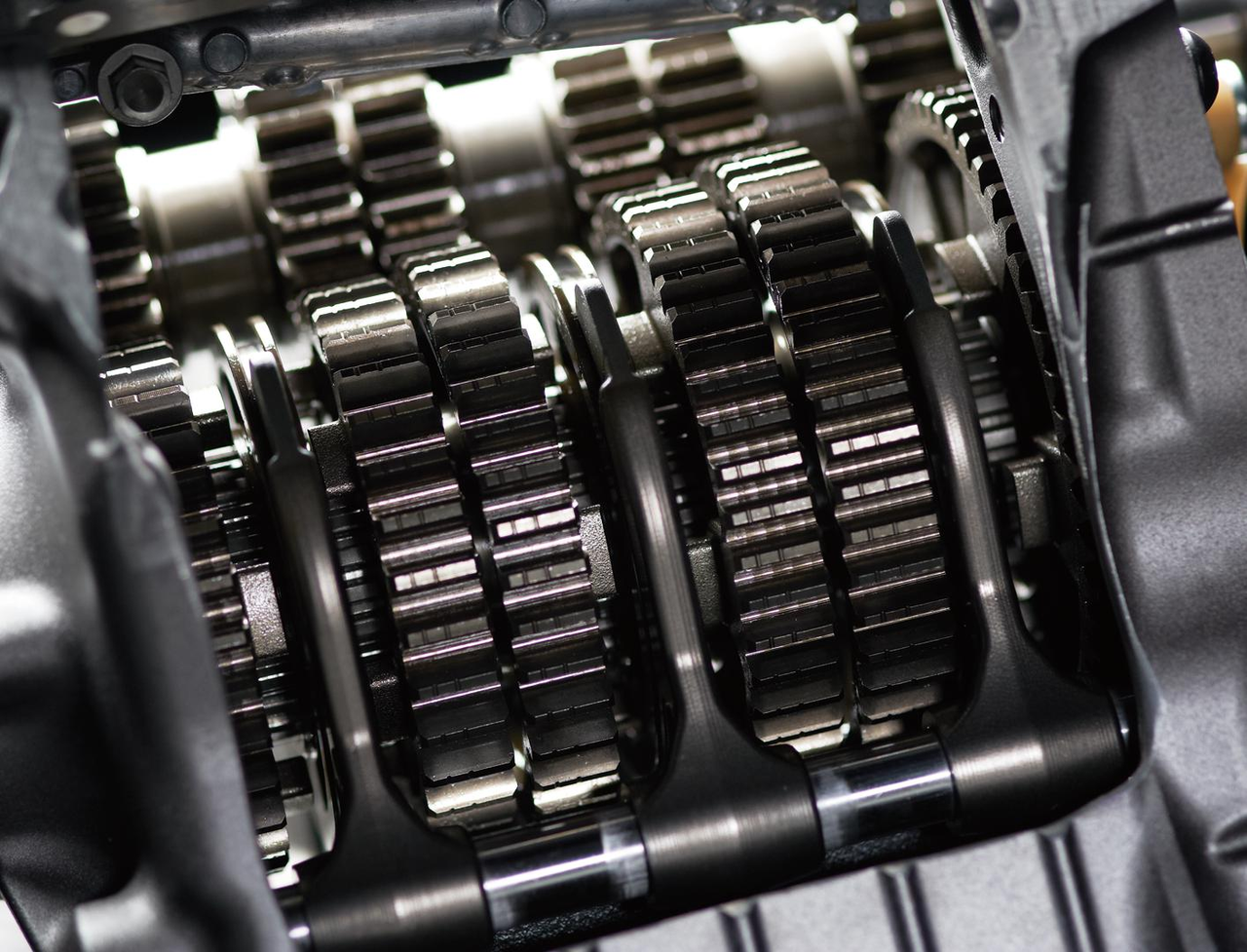
A dog-ring transmission system, the kind of transmission commonly found on MotoGP and Formula 1 race machines, facilitates smooth, quick shifting. Unlike conventional motorcycle transmissions, gear changes are performed by moving lightweight dog rings, while the gears themselves remain in fixed positions. Because the dog rings are significantly lighter than the gears, shift effort is reduced and a precise, positive shift feel is achieved. Shorter shift times are also possible, contributing to sharper acceleration performance.
Complementing the Ninja H2’s incredible engine and chassis performance, advanced electronics work behind the scenes to provide rider support. Depending on rider preference, many of the systems may be turned off. While the high-performance engine was designed to be accommodating even without the benefit of electronic assistance, these systems help riders more fully exploit the Ninja H2’s exceptional performance. Updated KTRC and KLCM offer more intuitive control of the Ninja H2’s supercharged acceleration, allowing riders to more confidently access the machine’s performance potential.
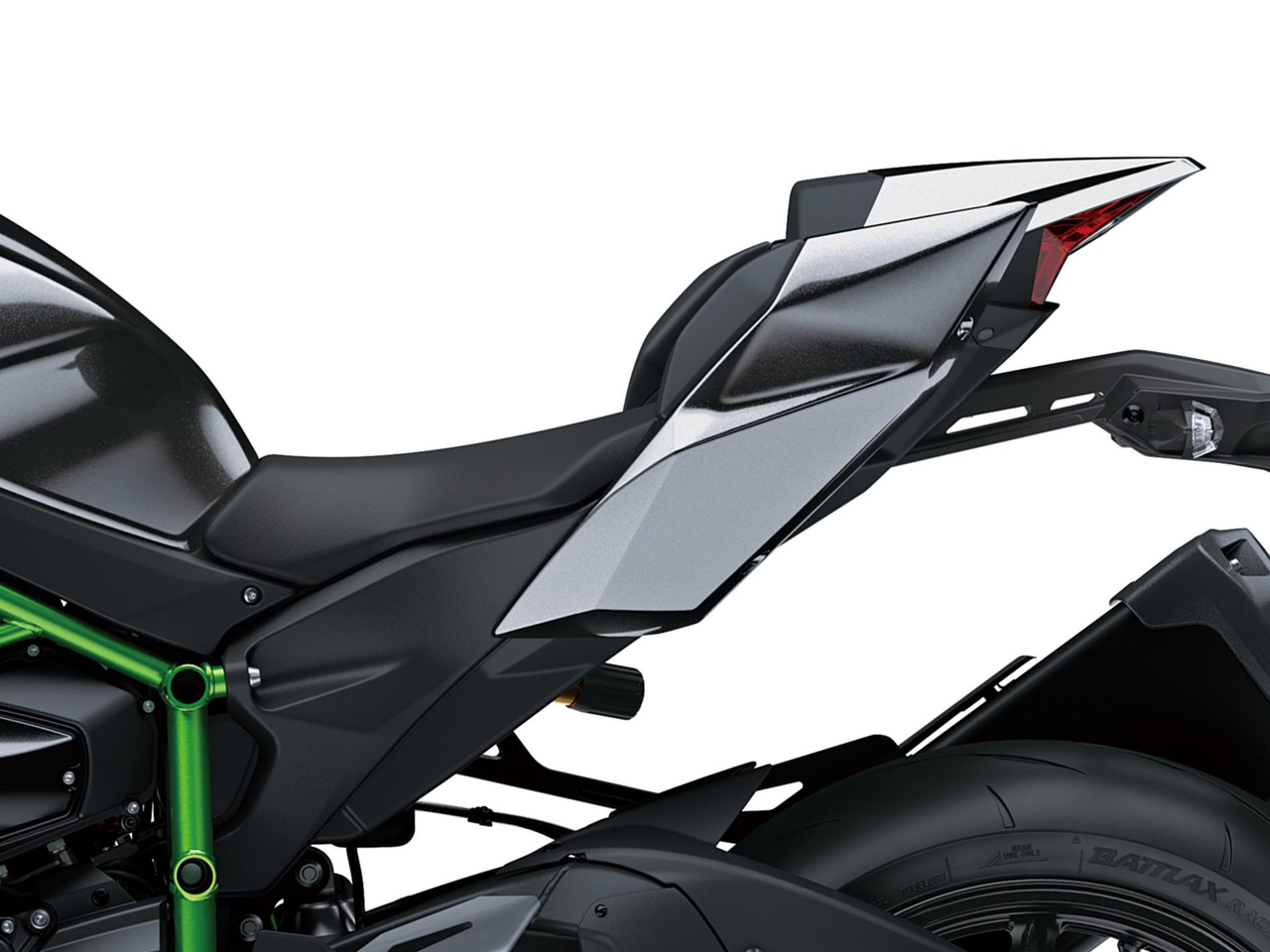
To maximise rider control during the kind of riding for which the Ninja H2 was designed—high-speed riding and riding on the circuit—and maintain a compact overall package, the Ninja H2’s rider triangle is similar to that of the Ninja ZX-10R, but slightly more relaxed. The solo-seat configuration is complemented by adjustable hip-supporting pads that support the rider during strong acceleration—a feature that helps the rider feel at one with their machine when exploring the full potential of the enhanced Ninja H2.
The Ninja H2’s trellis frame offered an elegant, lightweight solution to meeting the performance requirements for the chassis of the closed-course Ninja H2R. Able to harness the massive power of the Ninja H2R’s more than 300 PS engine, it has a balance of stiffness and flexibility that enables a very high level of stability while being able to handle external disturbances at high speeds. This philosophy of “supple compliance to external disturbances” became the foundation for frame design used in sport models across the Kawasaki lineup. Innovative features like the Swingarm Mounting Plate that bolts to the back of the engine contribute to the frame’s lightweight design by eliminating the need for cross members. The trellis frame’s open design also helps effectively dissipate heat generated by the supercharged engine.
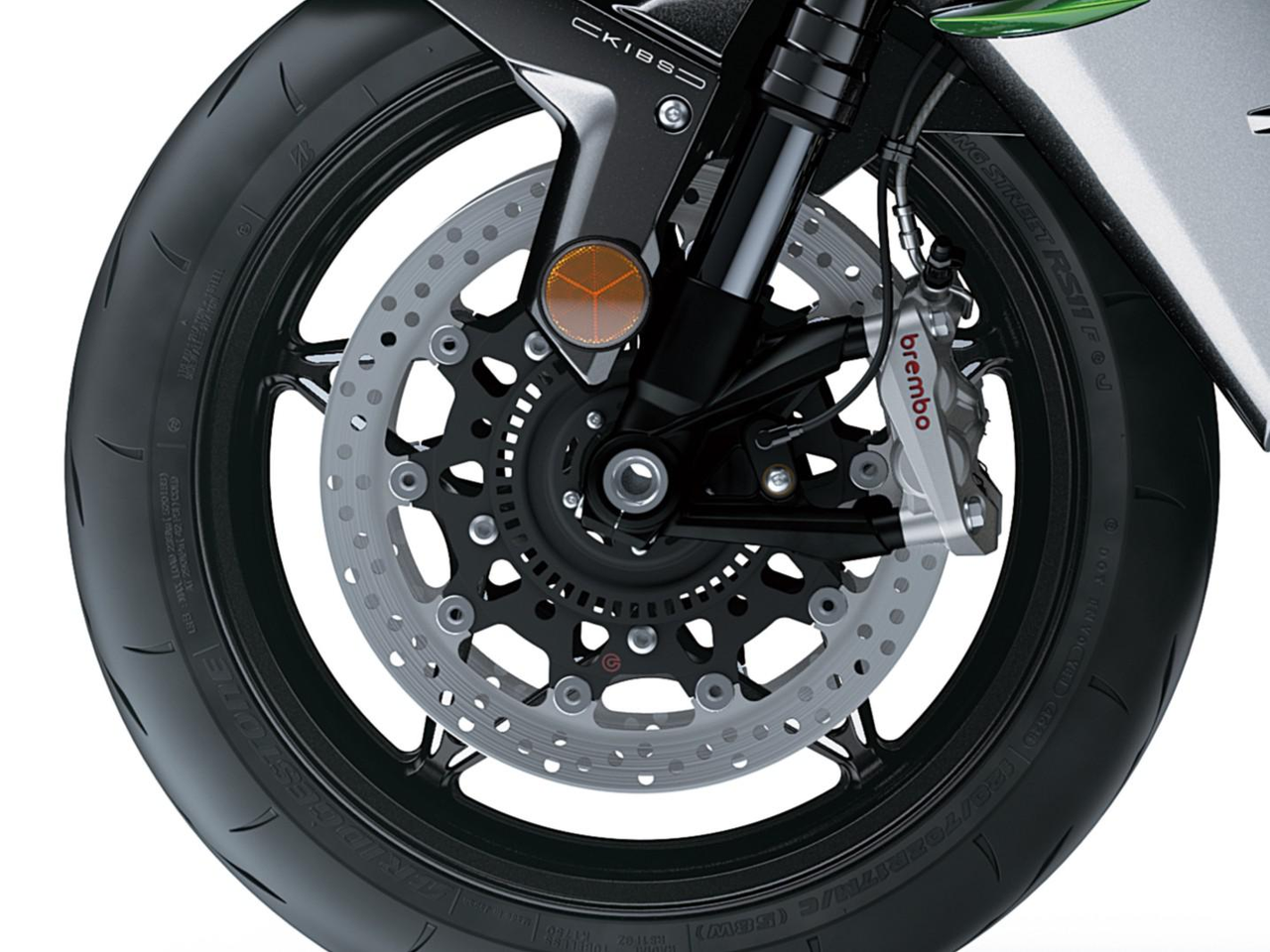
Massive Ø 330 mm Brembo semi-floating front discs are now gripped by Brembo’s latest high-spec calipers. Featuring a distinctive asymmetrical design that fuses function and form, the Hypure calipers achieve class-leading light weight while maintaining high rigidity to deliver superb braking force. Excellent thermal conductivity helps suppress fade even under high-load conditions, contributing to consistent braking performance. Brembo radial-pump master cylinder and reservoir minimise ineffective (idle) stroke so that when the brakes were called for, they respond immediately.
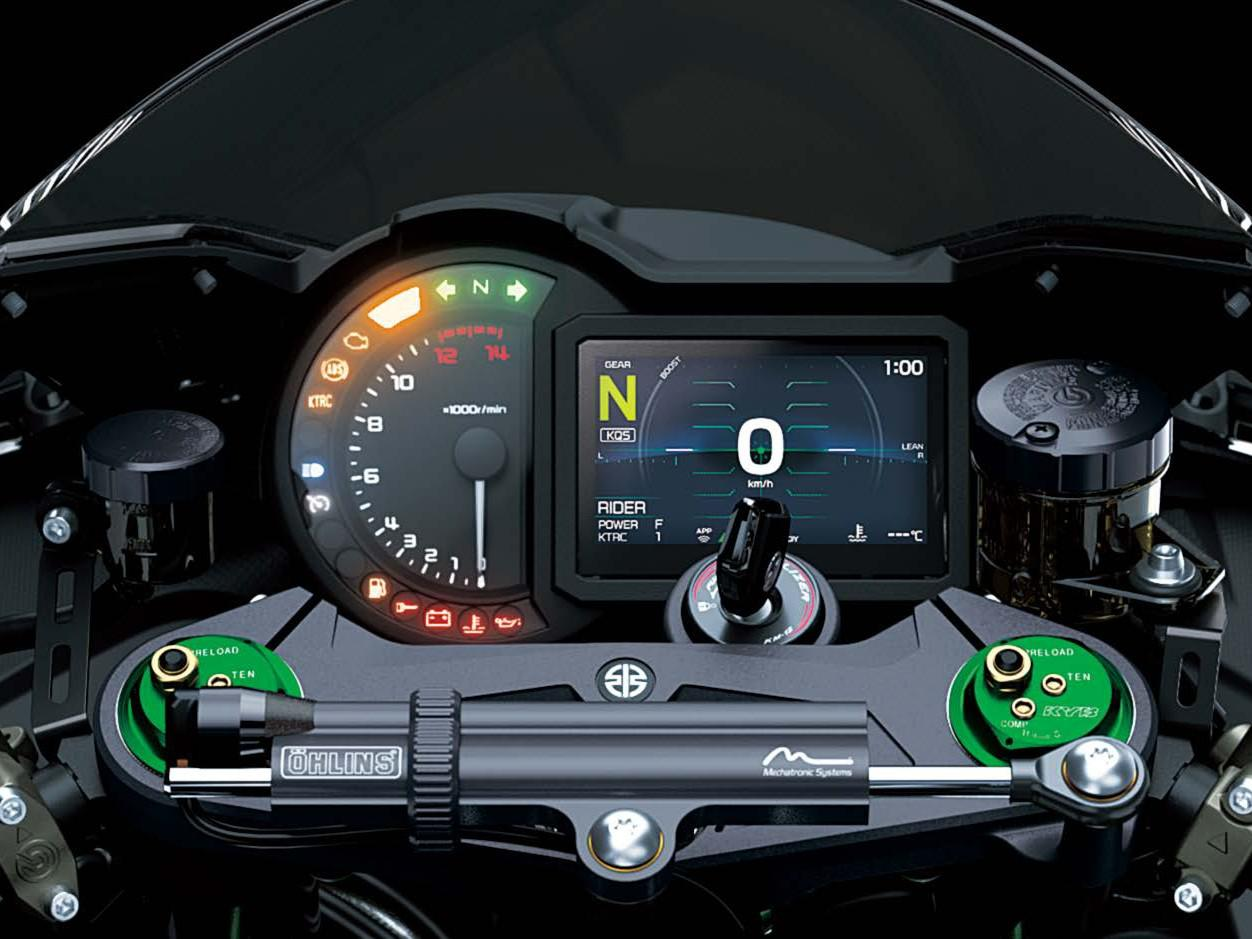
Fully adjustable, high-grade suspension components offer superb road-holding performance and impact absorption, contributing to vehicle stability at high speed, clear feedback to the rider, and a supple ride feel. At the front, KYB AOS-II racing suspension uses technology originally developed for motocross racing to deliver smooth initial action followed by strong damping as the fork is fully compressed. At the rear, an Öhlins TTX36 shock contributes to rear-end stability—which benefits cornering performance as well as front-end feel, adding to rider confidence—while its supple suspension action and superb bump absorption add to both sporty handling and in-town ride comfort.
The silver-mirror paint has evolved from the previous model to deliver an even stronger metallic appearance with increased brilliance. In addition, all exterior bodywork parts other than the carbon-fibre components on the CARBON model feature Kawasaki’s proprietary Highly Durable Paint. By allowing certain types of fine surface scratches to repair themselves, this finish helps the paint maintain a premium texture and presence befitting Kawasaki’s latest flagship model.
The Ninja H2’s bodywork is the result of an uncompromising pursuit of aerodynamic performance. To fully capitalise on the performance of the supercharged engine, the bodywork needed to both minimise drag and enhance control when riding at high speed. The slippery aerodynamics are complemented by a number of a downforce-generation devices that help ensure the front wheel has strong contact with the ground. The upper cowl’s chin spoiler—a distinct design feature now evident on many Ninja models—and mirror stays with airfoil cross-sections both generate downforce that contribute to high-speed stability. Designed by Kawasaki’s Aerospace Systems Company, the mirror stays even include Gurney flaps on their trailing edges to further enhance their effectiveness.
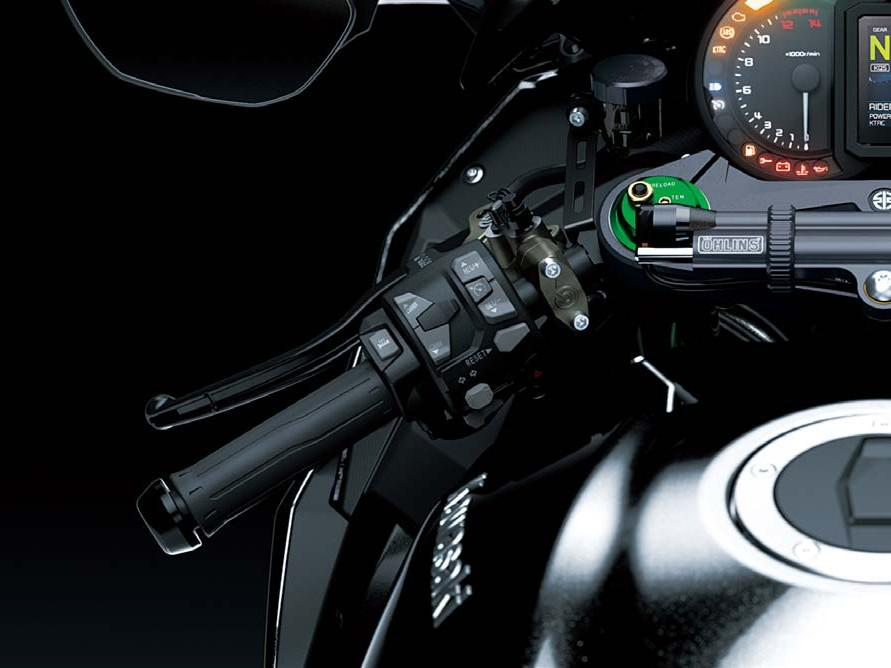
The high-quality instrument cluster combines an analogue tachometer with a high-resolution full-colour TFT display, presenting a wide range of information through clear, graphical layouts. Updated instrumentation for the 2027 Ninja H2 offers two selectable display types. Type 1 features a highly legible layout inspired by the silhouette of the air ducts, while Type 2 features enhanced boost and aviation-inspired lean/attitude displays that allows riders to intuitively grasp supercharger status and machine attitude. From the cockpit, the instrumentation helps to create a strong sense of unity between rider and machine as the rider pilots this high-performance supercharged machine.
The River Mark is reserved exclusively for select models of historic significance and exceptional engineering. Together with the Ninja H2R, the Ninja H2 was the first modern model to be adorned with the River Mark. As a symbol of the Kawasaki’s collective technological capability, it is a fitting mark for these flagship models with their in-house designed supercharged engine and intense acceleration performance.
To offer intense acceleration, an engine able to produce big power was essential. While a large-displacement engine could easily provide a high engine output, to ensure a lightweight, compact overall package, a compact engine was also desired. Using a supercharged engine enabled Kawasaki to achieve both of these engine design requirements. The Ninja H2’s 998 cm3 In-Line Four supercharged engine offered a maximum output of 200 PS with an engine size on par with other supersport litre-class power units. Designed in-house, the immense potential of the highly compact, highly efficient engine was a testament to the technology possessed by the KHI Group. For 2027, a new engine with model-specific tuning and final gearing refine the Ninja H2’s supercharged performance for real-world acceleration. Combined with a lighter new exhaust system, the result further highlights the distinctive acceleration sensation of Kawasaki’s supercharged flagship.
Designed for the performance parameters of the closed-course Ninja H2R and shared with the street-going Ninja H2, the chassis needed to ensure unflappable composure at ultra-high speeds, offer cornering performance to be able to enjoy riding on a circuit, and finally to have a highly accommodating character. High-speed stability could easily be achieved with a long wheelbase, but a shorter wheelbase was selected to achieve the compact overall package and sharp handling that were also desired. The frame needed not only to be stiff, but also to be able to absorb external disturbances, which, when encountered while riding at high speeds, could unsettle the chassis. The Ninja H2’s trellis frame provides both the strength to harness the incredible power of the supercharged engine, and the balanced flex to achieve the stability and pliability for high-speed riding. Chassis geometry very similar to a litre-class supersport model contributes to a compact package with handling that covers fun riding on the street and highway to the circuit. High-grade racing suspension further contributes to the handling performance, and high-spec Brembo brakes (now including Hypure front calipers on the 2027 model) deliver precise brake control to manage speed adjustments. These are complemented by single-seat ergonomics designed specifically to help riders enjoy the Ninja H2’s intense acceleration and sustained high-speed capabilities.
Even now, more than 10 years since its debut, the Ninja H2’s distinctive form remains timeless, a bold design exuding presence that reflects its incredible performance. More than cosmetic, the Ninja H2’s functional beauty is a product of joint development efforts with the KHI Group’s Aerospace Systems Company. Its aerodynamically sculpted bodywork minimises drag and enhances stability and control at high speed. Kawasaki’s original silver-mirror paint further underscores the Ninja H2’s position outside conventional boundaries. The special paint, even more brilliant on the 2027 model, is complemented by a layer of highly durable paint with self-repairing properties that help preserve its one-of-a-kind looks. From the cockpit, new instrumentation adds to the exhilaration of piloting a model designed to deliver the ultimate acceleration experience. In addition to a lean and pitch angle display inspired by aircraft HUDs, a graphically enhanced boost gauge gives riders visual confirmation of Ninja H2’s intense acceleration performance.
The limited-edition Ninja H2 CARBON features a carbon-fibre upper cowl similar to that of the Ninja H2R. The upper cowl, made from high-rigidity, lightweight CFRP (Carbon-Fibre Reinforced Plastic), instantly distinguishes the Ninja H2 CARBON from the standard Ninja H2, further heightening the sense of exhilaration that comes from claiming its otherworldly performance as your own.
Matching the new engine’s power characteristics, optimised pipe diameters and a revised exhaust layout are complemented by a compact silencer, resulting in a lighter, more compact exhaust system that sharpens the direct connection between engine output and forward motion. Its compact layout also contributes to the Ninja H2’s condensed, purposeful styling. The black finish of the silencer body, contrasted by a buff-polished heat guard, contributes to the tight overall appearance and further emphasises the Ninja H2’s focused character.
In addition to the full suite of advanced rider support technology that allows riders to explore the potential of the new Ninja H2 with confidence, a number of new features add to real-world enjoyment. Integrated Riding Modes, which link KTRC with Power Mode selection, let riders quickly and easily adapt to changing riding conditions. Electronic Cruise Control offers a respite between bouts of spirited riding. And smartphone connectivity via RIDEOLOGY THE APP MOTORCYCLE now includes Voice Command**, which enables riders to interface with their machine orally. Riding a machine capable of extraordinary acceleration requires a high level of focus. These features facilitate vehicle operation when not sport riding, helping riders conserve mental reserves in preparation for the next surge of acceleration. **Voice command feature requires a separate licence and availability varies by market
While the engine looks the same on the outside, it is essentially a completely different engine: the impeller and intake system represent a complete redesign; the pistons, cylinder head, cylinder, crankshaft and camshafts are new; throttle bodies are new; exhaust system is new; and gear ratios were revised. Engine tuning and final gearing were selected to deliver a stronger low- to mid-range torque feel together with the Ninja H2’s distinctive high-rpm acceleration sensation. The result is an engine that delivers powerful acceleration from any rpm, providing an exhilarating sensation unique to a supercharged engine.
A dog-ring transmission system, the kind of transmission commonly found on MotoGP and Formula 1 race machines, facilitates smooth, quick shifting. Unlike conventional motorcycle transmissions, gear changes are performed by moving lightweight dog rings, while the gears themselves remain in fixed positions. Because the dog rings are significantly lighter than the gears, shift effort is reduced and a precise, positive shift feel is achieved. Shorter shift times are also possible, contributing to sharper acceleration performance.
Complementing the Ninja H2’s incredible engine and chassis performance, advanced electronics work behind the scenes to provide rider support. Depending on rider preference, many of the systems may be turned off. While the high-performance engine was designed to be accommodating even without the benefit of electronic assistance, these systems help riders more fully exploit the Ninja H2’s exceptional performance. Updated KTRC and KLCM offer more intuitive control of the Ninja H2’s supercharged acceleration, allowing riders to more confidently access the machine’s performance potential.
To maximise rider control during the kind of riding for which the Ninja H2 was designed—high-speed riding and riding on the circuit—and maintain a compact overall package, the Ninja H2’s rider triangle is similar to that of the Ninja ZX-10R, but slightly more relaxed. The solo-seat configuration is complemented by adjustable hip-supporting pads that support the rider during strong acceleration—a feature that helps the rider feel at one with their machine when exploring the full potential of the enhanced Ninja H2.
The Ninja H2’s trellis frame offered an elegant, lightweight solution to meeting the performance requirements for the chassis of the closed-course Ninja H2R. Able to harness the massive power of the Ninja H2R’s more than 300 PS engine, it has a balance of stiffness and flexibility that enables a very high level of stability while being able to handle external disturbances at high speeds. This philosophy of “supple compliance to external disturbances” became the foundation for frame design used in sport models across the Kawasaki lineup. Innovative features like the Swingarm Mounting Plate that bolts to the back of the engine contribute to the frame’s lightweight design by eliminating the need for cross members. The trellis frame’s open design also helps effectively dissipate heat generated by the supercharged engine.
Massive Ø 330 mm Brembo semi-floating front discs are now gripped by Brembo’s latest high-spec calipers. Featuring a distinctive asymmetrical design that fuses function and form, the Hypure calipers achieve class-leading light weight while maintaining high rigidity to deliver superb braking force. Excellent thermal conductivity helps suppress fade even under high-load conditions, contributing to consistent braking performance. Brembo radial-pump master cylinder and reservoir minimise ineffective (idle) stroke so that when the brakes were called for, they respond immediately.
Fully adjustable, high-grade suspension components offer superb road-holding performance and impact absorption, contributing to vehicle stability at high speed, clear feedback to the rider, and a supple ride feel. At the front, KYB AOS-II racing suspension uses technology originally developed for motocross racing to deliver smooth initial action followed by strong damping as the fork is fully compressed. At the rear, an Öhlins TTX36 shock contributes to rear-end stability—which benefits cornering performance as well as front-end feel, adding to rider confidence—while its supple suspension action and superb bump absorption add to both sporty handling and in-town ride comfort.
The silver-mirror paint has evolved from the previous model to deliver an even stronger metallic appearance with increased brilliance. In addition, all exterior bodywork parts other than the carbon-fibre components on the CARBON model feature Kawasaki’s proprietary Highly Durable Paint. By allowing certain types of fine surface scratches to repair themselves, this finish helps the paint maintain a premium texture and presence befitting Kawasaki’s latest flagship model.
The Ninja H2’s bodywork is the result of an uncompromising pursuit of aerodynamic performance. To fully capitalise on the performance of the supercharged engine, the bodywork needed to both minimise drag and enhance control when riding at high speed. The slippery aerodynamics are complemented by a number of a downforce-generation devices that help ensure the front wheel has strong contact with the ground. The upper cowl’s chin spoiler—a distinct design feature now evident on many Ninja models—and mirror stays with airfoil cross-sections both generate downforce that contribute to high-speed stability. Designed by Kawasaki’s Aerospace Systems Company, the mirror stays even include Gurney flaps on their trailing edges to further enhance their effectiveness.
The high-quality instrument cluster combines an analogue tachometer with a high-resolution full-colour TFT display, presenting a wide range of information through clear, graphical layouts. Updated instrumentation for the 2027 Ninja H2 offers two selectable display types. Type 1 features a highly legible layout inspired by the silhouette of the air ducts, while Type 2 features enhanced boost and aviation-inspired lean/attitude displays that allows riders to intuitively grasp supercharger status and machine attitude. From the cockpit, the instrumentation helps to create a strong sense of unity between rider and machine as the rider pilots this high-performance supercharged machine.
The River Mark is reserved exclusively for select models of historic significance and exceptional engineering. Together with the Ninja H2R, the Ninja H2 was the first modern model to be adorned with the River Mark. As a symbol of the Kawasaki’s collective technological capability, it is a fitting mark for these flagship models with their in-house designed supercharged engine and intense acceleration performance.
Designed completely in-house, the immense potential of the highly compact, highly efficient supercharged engine is a testament to the technology possessed by the KHI Group.
Drawing on the know-how and technology possessed by the KHI Group, Kawasaki’s supercharged engine delivers high engine output while maintaining a compact design. The key to achieving this incredible performance lies in the engine’s supercharger – a motorcycle-specific unit designed completely in-house with technology from Kawasaki’s Gas Turbine & Machinery Company, Aerospace Company and Corporate Technology Division.
One of the greatest benefits of designing the supercharger in-house and tailoring its design to match the engine’s characteristics was that engineers were able to achieve high-efficiency operation over a wide range of conditions – something that would not have been possible by simply dropping in or trying to adapt an aftermarket automotive supercharger.
The importance of high efficiency in a supercharger is that, as the air is compressed, power-robbing heat gain is minimal. And while many superchargers are able to offer high-efficiency operation in a very limited range of conditions, Kawasaki’s supercharger offers high efficiency over a wide range of pressure ratios and flow rates – meaning over a wide range of engine speeds and vehicle speeds. This wide range of efficient operation (similar to having a wide power band) easily translates to strong acceleration. The supercharger’s high efficiency and minimal heat gain also meant that an intercooler was unnecessary, greatly saving weight and space, and enabling the engine’s compact design.
KCMF (Kawasaki Cornering Management Function) monitors engine and chassis parameters throughout the corner.
KCMF monitors engine and chassis parameters throughout the corner from entry, through the apex, to corner exit modulating brake force and engine power to facilitate smooth transition from acceleration to braking and back again, and to assist riders in tracing their intended line through the corner. KCMF oversees the following systems (where available): KTRC (including traction, wheelie and sliding control), KIBS (including pitching control), Kawasaki Engine Brake Control
Combined with Kawasaki’s proprietary dynamic modelling program, input from the IMU (Inertial Measurement Unit) enables even more precise chassis orientation awareness, the key to bringing Kawasaki’s electronics to the next level.
IMU means Enhanced Chassis Orientation Awareness. The strength of Kawasaki's cutting-edge electronics has always been the highly sophisticated programming that, using minimal hardware, gives the ECU an accurate real-time picture of what the chassis is doing. Kawasaki's proprietary dynamic modelling program makes skillful use of the magic formula tyre model as it examines changes in multiple parameters, enabling it to take into account changing road and tyre conditions. The addition of an IMU (Inertial Measurement Unit) enables inertia along 6 DOF (degrees of freedom) to be monitored. Acceleration along longitudinal, transverse and vertical axes, plus roll rate and pitch rate are measured. The yaw rate is calculated by the ECU. This additional feedback contributes to an even clearer real-time picture of chassis orientation, enabling even more precise management for control at the limit. With the addition of the IMU and the latest evolution of Kawasaki's advanced modelling software, Kawasaki's electronic engine and chassis management technology takes the step to the next level changing from setting-type and reaction-type systems to feedback-type systems to deliver even greater levels of riding excitement.
KTRC (Kawasaki TRaction Control), Kawasaki's advanced traction control system, offers a selection of modes to suit a wide range of riding situations, from sport riding to touring.
KTRC, Kawasaki's advanced traction control system provides both enhanced sport riding performance and the peace of mind to negotiate slippery surfaces with confidence. Multiple rider-selectable modes (the number of modes varies by model) offer progressively greater levels of intrusion to suit the riding situation and rider preference. Less intrusive modes maintain optimum traction during cornering. Designed with sport riding in mind, they facilitate acceleration out of corners by maximising forward drive from the rear wheel. And because Kawasaki’s sophisticated software bases its dynamic analysis on the chassis’ orientation relative to the track surface (rather than relative to a horizontal plane), it is able to take into account corner camber, gradient, etc, and adapt accordingly. In the more intrusive modes (and for some models, in any mode), when excessive wheel spin is detected, engine output is reduced to allow grip to be regained, effectively enabling riders to negotiate both short, slippery patches (train tracks or manhole covers) and extended stretches of bad roads (wet pavement, cobblestone, gravel) with confidence. Models equipped with IMU incorporate chassis-orientation feedback to offer even more precise management.
KLCM (Kawasaki Launch Control Mode) optimises acceleration from a stop by electronically managing engine output to prevent wheelspin.
Designed to assist riders by optimising acceleration from a stop, KLCM electronically manages engine output to prevent wheelspin when moving off. Riders can choose from three modes, each offering a progressively greater level of intrusion. Each mode allows the rider to leave from a stop with the throttle held wide open. With the clutch lever pulled in and the system activated, engine speed is limited to a determined speed while the rider holds the throttle open. Once the rider releases the clutch lever to engage the clutch, engine speed is allowed to increase, but power is regulated to prevent wheelspin and help keep the front wheel on the ground. (In Mode 1, the least intrusive, the front wheel may lift a little.) The system disengages automatically at 150 km/h or when the rider shifts into 3rd gear.
Kawasaki Engine Brake Control allows riders to set engine braking according to preference.
The Kawasaki Engine Brake Control system allows riders to select the amount of engine braking they prefer. When the system is activated, the engine braking effect is reduced, providing less interference when riding on the circuit.
Designed to help riders maximise their acceleration on the circuit by enabling clutchless upshifts with the throttle fully open, KQS detects that the shift lever has been actuated and sends a signal to the ECU to cut ignition so that the next gear can be engaged without having to use the clutch. On models that offer clutchless downshifts, during deceleration the system automatically controls engine speed so that the next lower gear can be selected without operating the clutch.
Electronic Throttle Valves allow the ECU to deliver the ideal amount of fuel and air to the engine.
Kawasaki's fully electronic throttle actuation system enables the ECU to control the volume of both the fuel (via fuel injectors) and the air (via throttle valves) delivered to the engine. Ideal fuel injection and throttle valve position results in smooth, natural engine response and the ideal engine output. The system also makes a significant contribution to reduced emissions. Electronic throttle valves also enable more precise control of electronic engine management systems like S-KTRC and KTRC, and allow the implementation of electronic systems like KLCM, Kawasaki Engine Brake Control, and Electronic Cruise Control.
Electronic Cruise Control allows vehicle speed to be fixed. Rider support technology that helps reduce rider fatigue on long trips and contributes to increased touring comfort.
Electronic Cruise Control allows a desired speed (engine rpm) to be maintained with the simple press of a button. Once activated, the rider does not have to constantly apply the throttle. This reduces stress on the right hand when travelling long distances, enabling relaxed cruising and contributing to a high level of riding comfort.
Power Mode selection allows engine power delivery to be changed to suit the riding situation.
Models equipped with multiple Power Modes offer riders an easily selectable choice of engine power delivery to suit riding conditions or preference. In addition to Full Power mode, one (Low) or two (Middle, Low) alternate mode(s) in which maximum power is limited and throttle response is milder are provided.
The Economical Riding Indicator is a mark appearing on the instrument panel to indicate favourable fuel consumption, encouraging fuel efficient riding.
Using high-precision electronic control for engine management, Kawasaki models can achieve a high level of fuel efficiency. However, fuel consumption is greatly affected by throttle use, gear selection, and other elements under the rider's control. The Economical Riding Indicator is a function that indicates when current riding conditions are consuming a low amount of fuel. The system continuously monitors fuel consumption, regardless of vehicle speed, engine speed, throttle position and other riding conditions. When fuel consumption is low for a given speed (i.e. fuel efficiency is high), an "ECO" mark appears on the instrument panel's LCD screen. By riding so that the "ECO" mark remains on, fuel consumption can be reduced. While effective vehicle speed and engine speed may vary by model, paying attention to conditions that cause the "ECO" mark to appear can help riders improve their fuel efficiency – a handy way to increase cruising range. Further, keeping fuel consumption low also helps minimise negative impact on the environment.
KIBS (Kawasaki Intelligent anti-lock Brake System) is a high-precision brake system designed specifically for supersport models, offering highly efficient braking while maintaining natural feel.
Kawasaki developed KIBS to take into account the particular handling characteristics of supersport motorcycles, ensuring highly efficient braking with minimal intrusion during hard sport riding. It is the first mass-production brake system to link the ABS ECU (Electronic Control Unit) and engine ECU. In addition front and rear wheel speed, KIBS monitors front brake caliper hydraulic pressure, throttle position, engine speed, clutch actuation and gear position. This diverse information is analysed to determine the ideal front brake hydraulic pressure. Through precise control, the large drops in hydraulic pressure seen on standard ABS systems can be avoided. Additionally, the tendency on supersport models for the rear wheel to lift under heavy braking can be suppressed and rear brake controllability can be maintained when downshifting.
ABS (Anti-lock Brake System) ensures stable braking performance by preventing wheel lock during braking.
Sudden over-application of the brakes, or braking on low-grip surfaces (surfaces with a low coefficient of friction) such as wet asphalt or manhole covers may cause a motorcycle's wheel(s) to lock up and slip. ABS was developed to prevent such incidents. Kawasaki ABS systems are controlled by high precision and highly reliable programming formulated based on thorough testing of numerous riding situations. By ensuring stable braking performance, they offer rider reassurance that contributes to greater riding enjoyment. And to meet the special requirements of certain riders, specialised ABS systems are also available. For example, KIBS (Kawasaki Intelligent anti-lock Brake System) is a high-precision brake system designed specifically for supersport models, enabling sport riding to be enjoyed by a wider range of riders. And by linking the front and rear brakes, K-ACT (Kawasaki Advanced Coactive-braking Technology) ABS provides the confidence to enjoy touring on heavyweight models. Kawasaki is continually working on the development of other advanced ABS systems.
Smartphone connectivity contributes to an enhanced motorcycling experience by enabling riders to connect to their motorcycle wirelessly.
Clever technology enables riders to connect to their motorcycle wirelessly. Using the smartphone application RIDEOLOGY THE APP a number of instrument functions can be accessed, contributing to an enhanced motorcycling experience. Vehicle information (such as the odometer, fuel gauge, maintenance schedule, etc) can be viewed on the smartphone. Riding logs (varies by model, but may include GPS route, gear position, rpm, and other information) can be viewed on the smartphone. When connected, telephone (call, mail) notices are displayed on the instrument panel. Riders can also make changes to their motorcycle instrument display settings (preferred units, clock and date setting, etc) via the smartphone. And on certain models, it is even possible to check and adjust vehicle settings (such as Rider Mode, electronic rider support features, and payload settings) using the smartphone.
Designed completely in-house, the immense potential of the highly compact, highly efficient supercharged engine is a testament to the technology possessed by the KHI Group.
Drawing on the know-how and technology possessed by the KHI Group, Kawasaki’s supercharged engine delivers high engine output while maintaining a compact design. The key to achieving this incredible performance lies in the engine’s supercharger – a motorcycle-specific unit designed completely in-house with technology from Kawasaki’s Gas Turbine & Machinery Company, Aerospace Company and Corporate Technology Division.
One of the greatest benefits of designing the supercharger in-house and tailoring its design to match the engine’s characteristics was that engineers were able to achieve high-efficiency operation over a wide range of conditions – something that would not have been possible by simply dropping in or trying to adapt an aftermarket automotive supercharger.
The importance of high efficiency in a supercharger is that, as the air is compressed, power-robbing heat gain is minimal. And while many superchargers are able to offer high-efficiency operation in a very limited range of conditions, Kawasaki’s supercharger offers high efficiency over a wide range of pressure ratios and flow rates – meaning over a wide range of engine speeds and vehicle speeds. This wide range of efficient operation (similar to having a wide power band) easily translates to strong acceleration. The supercharger’s high efficiency and minimal heat gain also meant that an intercooler was unnecessary, greatly saving weight and space, and enabling the engine’s compact design.
KCMF (Kawasaki Cornering Management Function) monitors engine and chassis parameters throughout the corner.
KCMF monitors engine and chassis parameters throughout the corner from entry, through the apex, to corner exit modulating brake force and engine power to facilitate smooth transition from acceleration to braking and back again, and to assist riders in tracing their intended line through the corner. KCMF oversees the following systems (where available): KTRC (including traction, wheelie and sliding control), KIBS (including pitching control), Kawasaki Engine Brake Control
Combined with Kawasaki’s proprietary dynamic modelling program, input from the IMU (Inertial Measurement Unit) enables even more precise chassis orientation awareness, the key to bringing Kawasaki’s electronics to the next level.
IMU means Enhanced Chassis Orientation Awareness. The strength of Kawasaki's cutting-edge electronics has always been the highly sophisticated programming that, using minimal hardware, gives the ECU an accurate real-time picture of what the chassis is doing. Kawasaki's proprietary dynamic modelling program makes skillful use of the magic formula tyre model as it examines changes in multiple parameters, enabling it to take into account changing road and tyre conditions. The addition of an IMU (Inertial Measurement Unit) enables inertia along 6 DOF (degrees of freedom) to be monitored. Acceleration along longitudinal, transverse and vertical axes, plus roll rate and pitch rate are measured. The yaw rate is calculated by the ECU. This additional feedback contributes to an even clearer real-time picture of chassis orientation, enabling even more precise management for control at the limit. With the addition of the IMU and the latest evolution of Kawasaki's advanced modelling software, Kawasaki's electronic engine and chassis management technology takes the step to the next level changing from setting-type and reaction-type systems to feedback-type systems to deliver even greater levels of riding excitement.
KTRC (Kawasaki TRaction Control), Kawasaki's advanced traction control system, offers a selection of modes to suit a wide range of riding situations, from sport riding to touring.
KTRC, Kawasaki's advanced traction control system provides both enhanced sport riding performance and the peace of mind to negotiate slippery surfaces with confidence. Multiple rider-selectable modes (the number of modes varies by model) offer progressively greater levels of intrusion to suit the riding situation and rider preference. Less intrusive modes maintain optimum traction during cornering. Designed with sport riding in mind, they facilitate acceleration out of corners by maximising forward drive from the rear wheel. And because Kawasaki’s sophisticated software bases its dynamic analysis on the chassis’ orientation relative to the track surface (rather than relative to a horizontal plane), it is able to take into account corner camber, gradient, etc, and adapt accordingly. In the more intrusive modes (and for some models, in any mode), when excessive wheel spin is detected, engine output is reduced to allow grip to be regained, effectively enabling riders to negotiate both short, slippery patches (train tracks or manhole covers) and extended stretches of bad roads (wet pavement, cobblestone, gravel) with confidence. Models equipped with IMU incorporate chassis-orientation feedback to offer even more precise management.
KLCM (Kawasaki Launch Control Mode) optimises acceleration from a stop by electronically managing engine output to prevent wheelspin.
Designed to assist riders by optimising acceleration from a stop, KLCM electronically manages engine output to prevent wheelspin when moving off. Riders can choose from three modes, each offering a progressively greater level of intrusion. Each mode allows the rider to leave from a stop with the throttle held wide open. With the clutch lever pulled in and the system activated, engine speed is limited to a determined speed while the rider holds the throttle open. Once the rider releases the clutch lever to engage the clutch, engine speed is allowed to increase, but power is regulated to prevent wheelspin and help keep the front wheel on the ground. (In Mode 1, the least intrusive, the front wheel may lift a little.) The system disengages automatically at 150 km/h or when the rider shifts into 3rd gear.
Kawasaki Engine Brake Control allows riders to set engine braking according to preference.
The Kawasaki Engine Brake Control system allows riders to select the amount of engine braking they prefer. When the system is activated, the engine braking effect is reduced, providing less interference when riding on the circuit.
Designed to help riders maximise their acceleration on the circuit by enabling clutchless upshifts with the throttle fully open, KQS detects that the shift lever has been actuated and sends a signal to the ECU to cut ignition so that the next gear can be engaged without having to use the clutch. On models that offer clutchless downshifts, during deceleration the system automatically controls engine speed so that the next lower gear can be selected without operating the clutch.
Electronic Throttle Valves allow the ECU to deliver the ideal amount of fuel and air to the engine.
Kawasaki's fully electronic throttle actuation system enables the ECU to control the volume of both the fuel (via fuel injectors) and the air (via throttle valves) delivered to the engine. Ideal fuel injection and throttle valve position results in smooth, natural engine response and the ideal engine output. The system also makes a significant contribution to reduced emissions. Electronic throttle valves also enable more precise control of electronic engine management systems like S-KTRC and KTRC, and allow the implementation of electronic systems like KLCM, Kawasaki Engine Brake Control, and Electronic Cruise Control.
Electronic Cruise Control allows vehicle speed to be fixed. Rider support technology that helps reduce rider fatigue on long trips and contributes to increased touring comfort.
Electronic Cruise Control allows a desired speed (engine rpm) to be maintained with the simple press of a button. Once activated, the rider does not have to constantly apply the throttle. This reduces stress on the right hand when travelling long distances, enabling relaxed cruising and contributing to a high level of riding comfort.
Power Mode selection allows engine power delivery to be changed to suit the riding situation.
Models equipped with multiple Power Modes offer riders an easily selectable choice of engine power delivery to suit riding conditions or preference. In addition to Full Power mode, one (Low) or two (Middle, Low) alternate mode(s) in which maximum power is limited and throttle response is milder are provided.
The Economical Riding Indicator is a mark appearing on the instrument panel to indicate favourable fuel consumption, encouraging fuel efficient riding.
Using high-precision electronic control for engine management, Kawasaki models can achieve a high level of fuel efficiency. However, fuel consumption is greatly affected by throttle use, gear selection, and other elements under the rider's control. The Economical Riding Indicator is a function that indicates when current riding conditions are consuming a low amount of fuel. The system continuously monitors fuel consumption, regardless of vehicle speed, engine speed, throttle position and other riding conditions. When fuel consumption is low for a given speed (i.e. fuel efficiency is high), an "ECO" mark appears on the instrument panel's LCD screen. By riding so that the "ECO" mark remains on, fuel consumption can be reduced. While effective vehicle speed and engine speed may vary by model, paying attention to conditions that cause the "ECO" mark to appear can help riders improve their fuel efficiency – a handy way to increase cruising range. Further, keeping fuel consumption low also helps minimise negative impact on the environment.
KIBS (Kawasaki Intelligent anti-lock Brake System) is a high-precision brake system designed specifically for supersport models, offering highly efficient braking while maintaining natural feel.
Kawasaki developed KIBS to take into account the particular handling characteristics of supersport motorcycles, ensuring highly efficient braking with minimal intrusion during hard sport riding. It is the first mass-production brake system to link the ABS ECU (Electronic Control Unit) and engine ECU. In addition front and rear wheel speed, KIBS monitors front brake caliper hydraulic pressure, throttle position, engine speed, clutch actuation and gear position. This diverse information is analysed to determine the ideal front brake hydraulic pressure. Through precise control, the large drops in hydraulic pressure seen on standard ABS systems can be avoided. Additionally, the tendency on supersport models for the rear wheel to lift under heavy braking can be suppressed and rear brake controllability can be maintained when downshifting.
ABS (Anti-lock Brake System) ensures stable braking performance by preventing wheel lock during braking.
Sudden over-application of the brakes, or braking on low-grip surfaces (surfaces with a low coefficient of friction) such as wet asphalt or manhole covers may cause a motorcycle's wheel(s) to lock up and slip. ABS was developed to prevent such incidents. Kawasaki ABS systems are controlled by high precision and highly reliable programming formulated based on thorough testing of numerous riding situations. By ensuring stable braking performance, they offer rider reassurance that contributes to greater riding enjoyment. And to meet the special requirements of certain riders, specialised ABS systems are also available. For example, KIBS (Kawasaki Intelligent anti-lock Brake System) is a high-precision brake system designed specifically for supersport models, enabling sport riding to be enjoyed by a wider range of riders. And by linking the front and rear brakes, K-ACT (Kawasaki Advanced Coactive-braking Technology) ABS provides the confidence to enjoy touring on heavyweight models. Kawasaki is continually working on the development of other advanced ABS systems.
Smartphone connectivity contributes to an enhanced motorcycling experience by enabling riders to connect to their motorcycle wirelessly.
Clever technology enables riders to connect to their motorcycle wirelessly. Using the smartphone application RIDEOLOGY THE APP a number of instrument functions can be accessed, contributing to an enhanced motorcycling experience. Vehicle information (such as the odometer, fuel gauge, maintenance schedule, etc) can be viewed on the smartphone. Riding logs (varies by model, but may include GPS route, gear position, rpm, and other information) can be viewed on the smartphone. When connected, telephone (call, mail) notices are displayed on the instrument panel. Riders can also make changes to their motorcycle instrument display settings (preferred units, clock and date setting, etc) via the smartphone. And on certain models, it is even possible to check and adjust vehicle settings (such as Rider Mode, electronic rider support features, and payload settings) using the smartphone.
| Engine Type | Liquid-cooled, 4-stroke, in-line four with Supercharger |
|---|---|
| Compression ratio | 10.2:1 |
| Valve system | DOHC, 16 valves |
| Bore x stroke | 76.0 x 55.0 mm |
| Displacement | 998 cm³ |
| Fuel System | Fuel injection with dual injection: 40 mm x 4 |
| Lubrication | Forced lubrication, wet sump with oil cooler |
| Starting system | Electric |
| Ignition | Digital |
| Maximum power | 147.1 kW {200 PS} / 11,000 rpm |
|---|---|
| Maximum power with RAM Air | 154.0 kW {209 PS} / 11,000 rpm |
| Maximum torque | 135.0 N•m {13.8 kgf•m} / 8,500 rpm |
| CO2 emission | 136.0 g/km |
| Fuel consumption | 5.9 l/100km |
| Transmission | 6-speed return dog-ring |
| Clutch | Wet, multi disc |
| Primary reduction ratio | 1.480 (74/50) |
| Gear ratios 1st | 3.077 (40/13) |
| Gear ratios 2nd | 2.471 (42/17) |
| Gear ratios 3rd | 2.045 (45/22) |
| Gear ratios 4th | 1.727 (38/22) |
| Gear ratios 5th | 1.524 (32/21) |
| Gear ratios 6th | 1.348 (31/23) |
| Final drive | Chain |
| Final reduction ratio | 2.588 (44/17) |
| Frame type | Trellis, high-tensile steel with swingarm mounting plate |
|---|---|
| Rake | 24.5 ° |
| Trail | 103 mm |
| Wheel travel front | 120 mm |
| Wheel travel rear | 135 mm |
| Tyre, front | 120/70 ZR17 M/C (58W) |
| Tyre, rear | 200/55 ZR17 M/C (78W) |
| L x W x H | 2,085 x 770 x 1,125 mm |
| Steering angle L/R | 27° / 27° |
| Wheel base | 1,455 mm |
| Ground clearance | 130 mm |
| Fuel capacity | 17.0 litres |
| Seat height | 825 mm |
| Curb mass* | 238 kg |
| Estimated dry weight** | 218 kg |
| Front brake type | Dual semi-floating Brembo discs |
|---|---|
| Front brake diameter | Ø 330 mm |
| Front brake caliper type | Brembo radial-mount, Hypure monobloc, opposed 4-piston |
| Rear brake type | Single disc |
| Rear brake diameter | Ø 250 mm |
| Rear brake caliper type | Brembo, opposed dual-piston |
| Front suspension type | Inverted fork with compression and rebound damping, spring preload adjustability, and top-out springs |
| Front suspension diameter | Ø 43 mm |
| Rear suspension type | Uni-Trak, Öhlins TTX36 gas-charged shock with piggyback reservoir, compression and rebound damping, spring preload adjustability, and top-out spring |
Inpage Navigation Section: Accessories
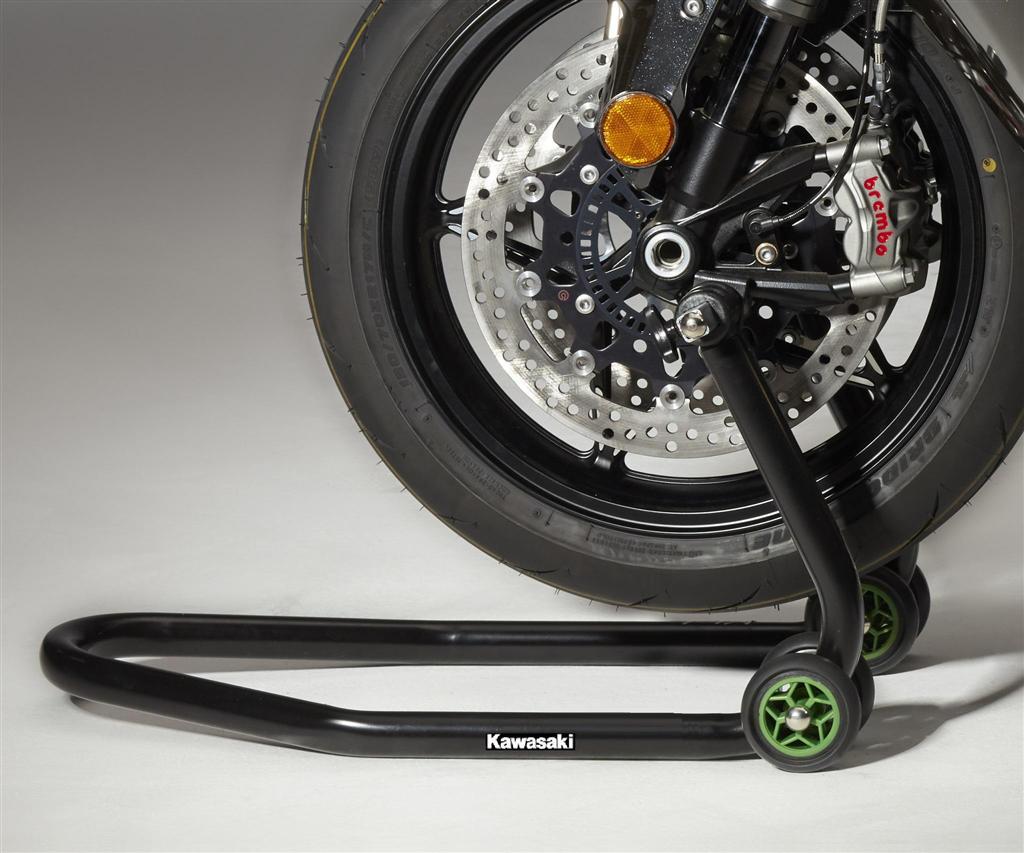
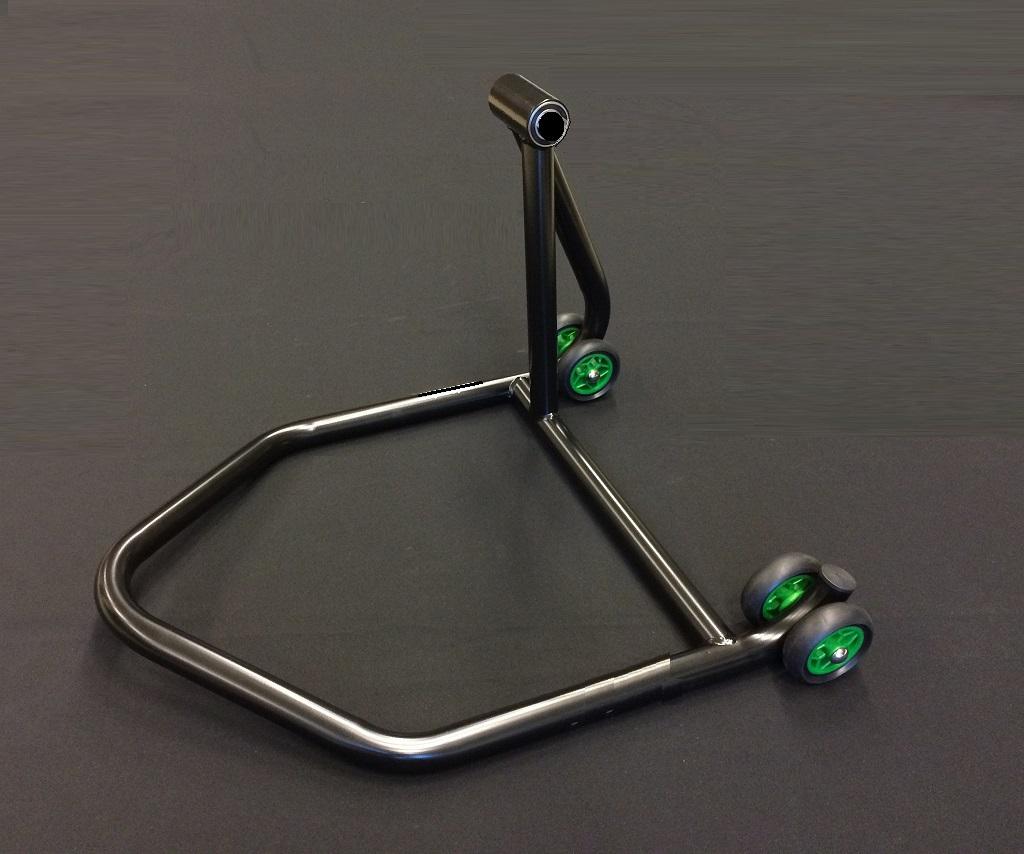
Special single-sided rear swingarm stand made specially for the Ninja H2 models.
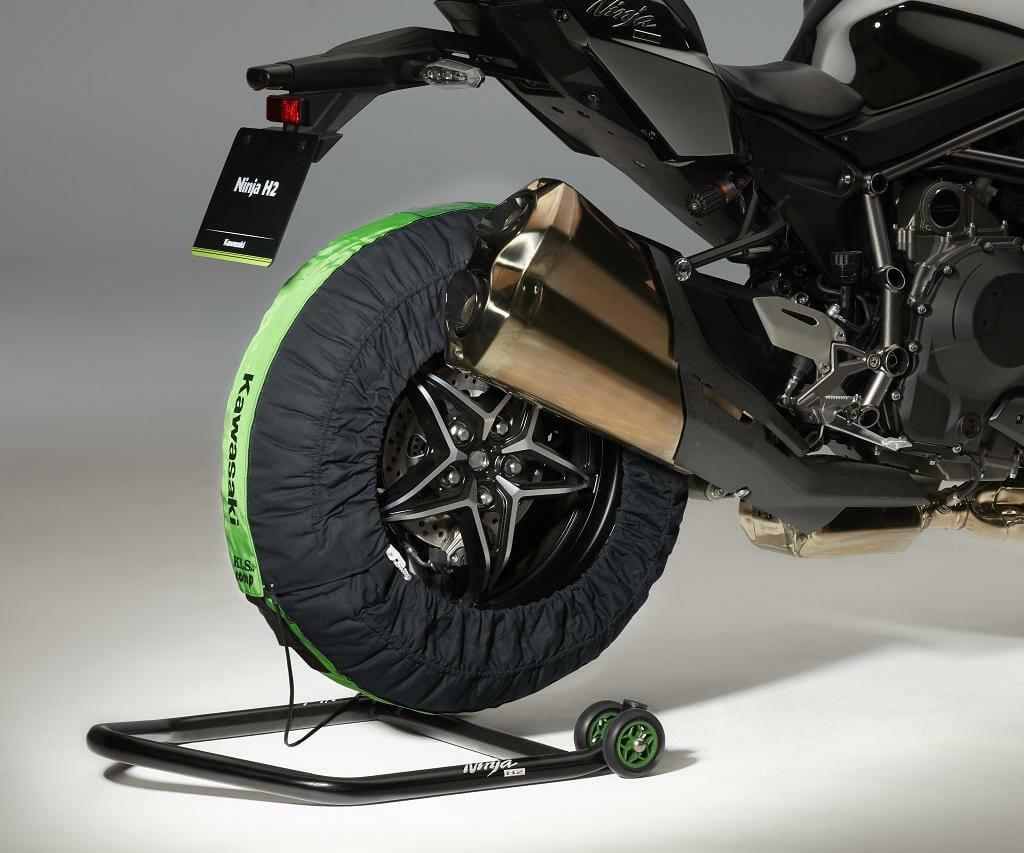
Tire warmer sets similar to the ones used by the KRT superbike team. Tire warmers with carbon-fibre heating technology. This gives fast heating of tire and rim without local overheating and a constant temperature. The sides of the tire warmer reach far over the rim flange keep the heat inside. This way the pressure of the tyre is stabilized. A high precision thermostat ensures a target temperature of 80-85 °C.
At an ambient temperature of 20 °C, it takes approx. 35 minutes to reach a tyre temperature of 80-85 °C and a rim temperature of approx. 40°C.
The tire warmers are equipped with a red indicator LED to indicate the active heating mode. Sidewalls made of high quality heat-resistant ‘NOMEX for optimum reliability. A central velcro flap and elastics integrated at the side enable easy and fast assembly and disassembly.
Connection is 1.8 m power cable, with Euro plug.
Suitable for front 120-17" and rear 195-200-17" tires.
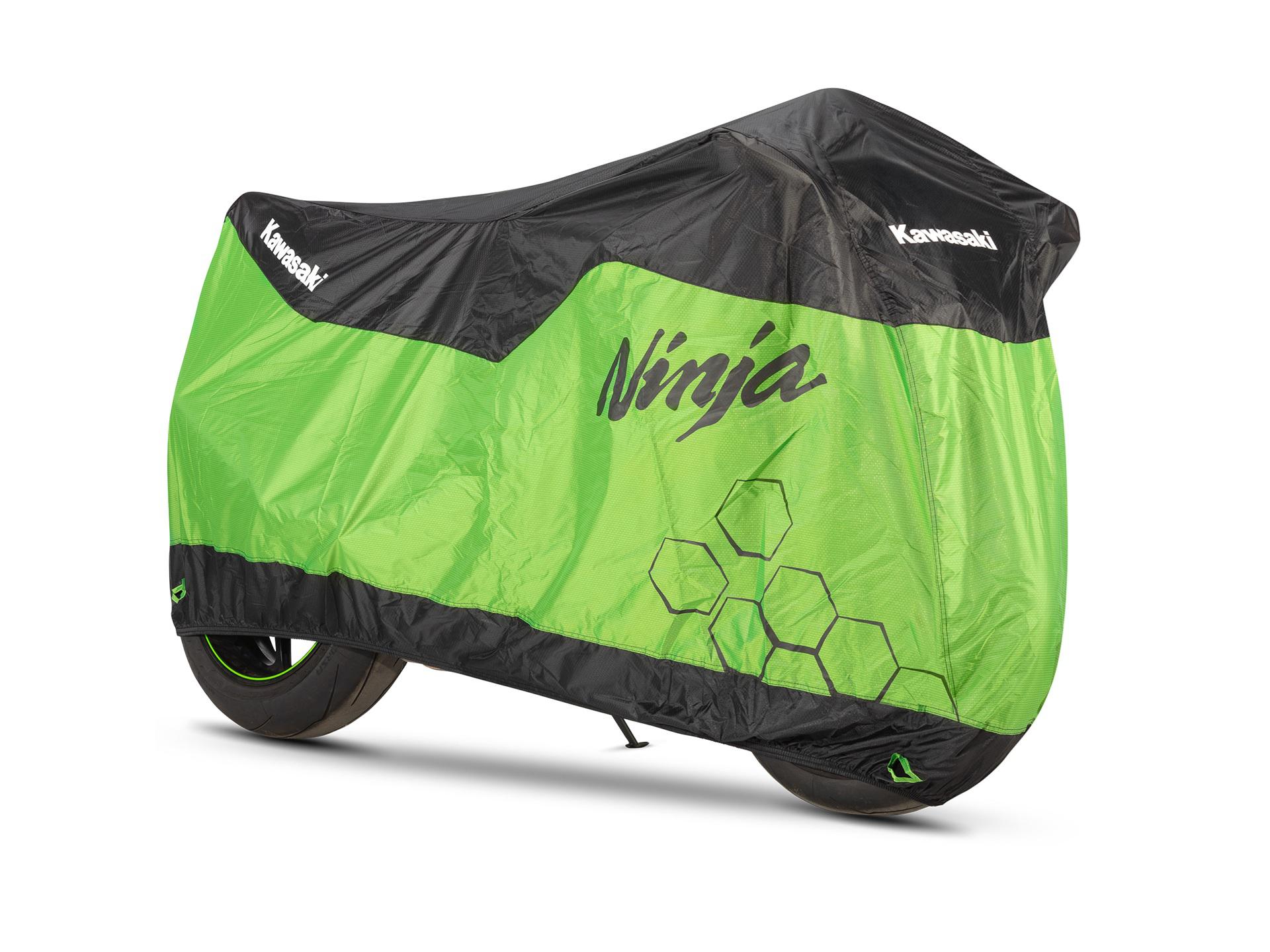
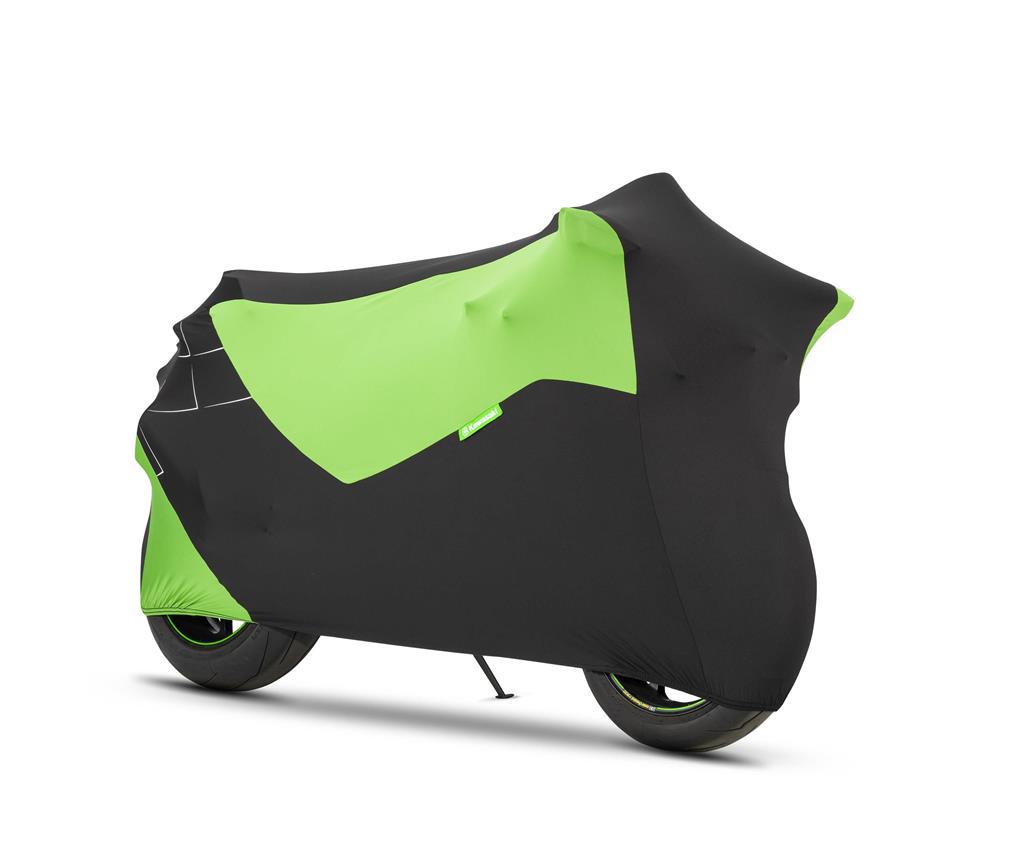
Made from strong Anti-tear Honeycomb ripstop fabric. Heat resistance till 120 degrees Celcius. Subtle branding.
100% Polyester. With multi usable (back)packing string bag.
Fits:
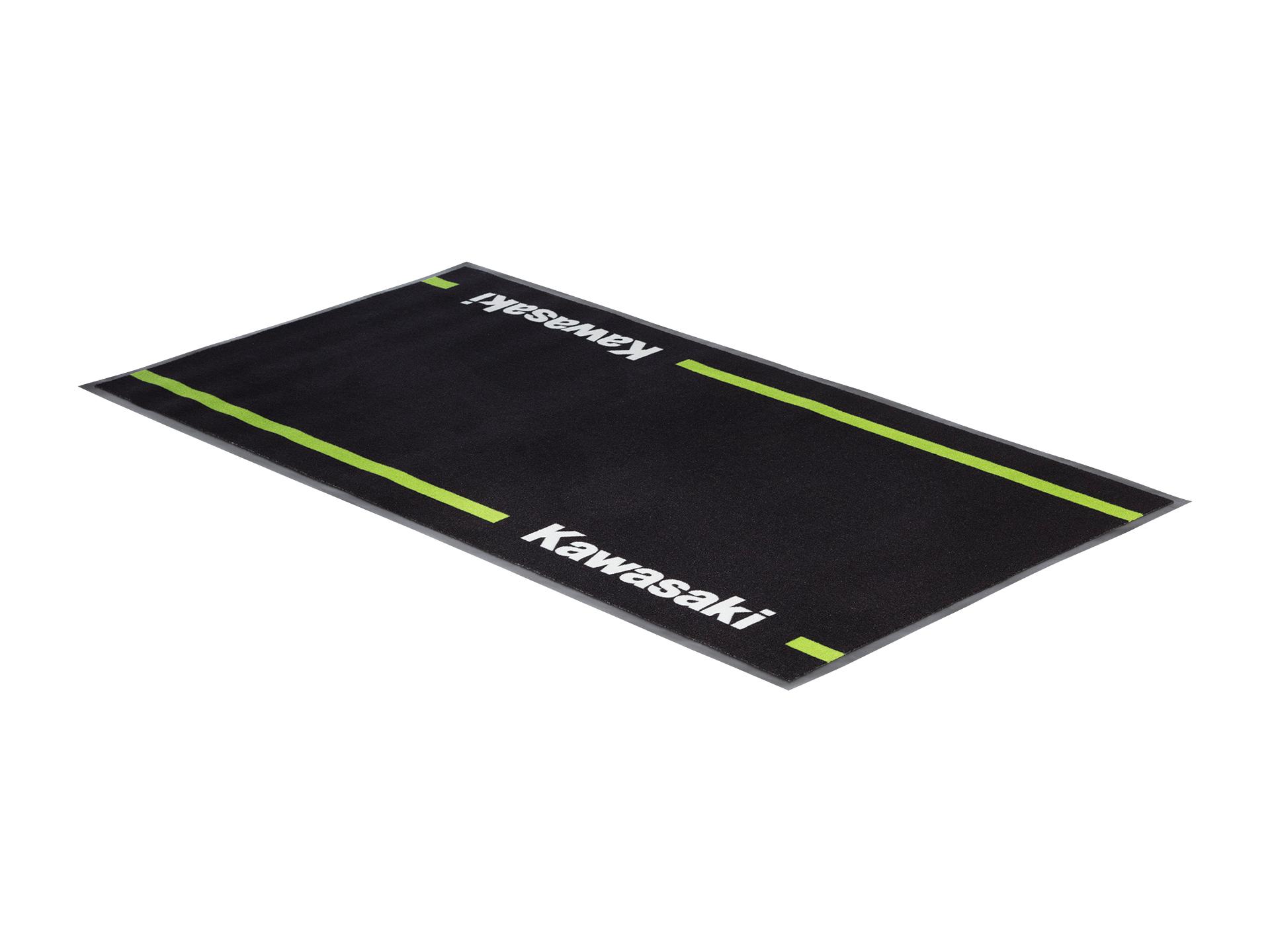
Whether you want to park your bike in a pitbox or in your garage, let your precious machine rest in style on this Kawasaki Garage Mat. The mat meets new FIM environmental codes and offers a high level of absorption and dust-control features.